You Can’t Go Home Again
We didn’t know we were entering a new era until it arrived. We can never go back.
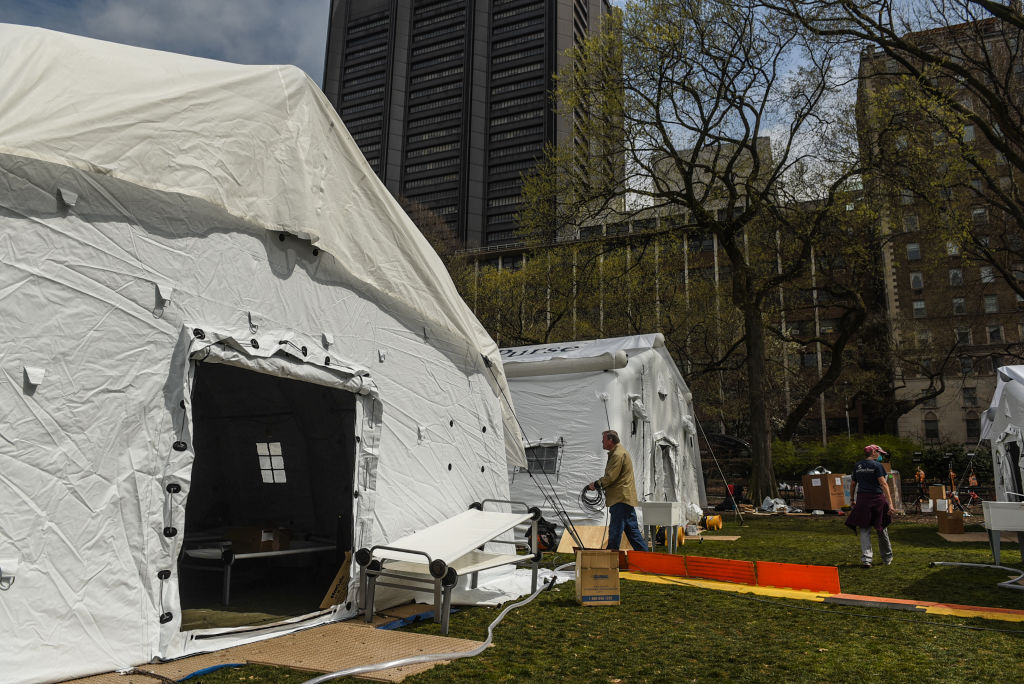
Tents are seen in an emergency field hospital to aid in the COVID-19 pandemic in Central Park on March 30, 2020 in New York City. Stephanie Keith / Getty
My father calls me and says, “two weeks.” He’s a respiratory therapist, and that’s how long until he suspects the Pittsburgh hospital system may start to get overwhelmed by COVID-19 cases. He’s worried about me, in New York City. I nix his plan to try to rent me a room in mill-town-turned-hip-locale Millvale, just outside Pittsburgh, explaining that fleeing New York is antisocial behavior. He insists on mailing me some gloves to wear when I go to the grocery store.
He tells me about a gunshot-wound victim in his hospital unit. “Not a coronavirus case!” he jokes, in the typically dark fashion of someone who has worked in the ER for years. I ask him if he’s heard that John Prine has coronavirus. He has — he was never much of a Prine fan, he says, but he once read a Rolling Stone story about Prine in the 1970s that mentioned the songwriter’s days as a mail carrier, and that he’d occasionally take shelter from the snow in the mail room’s relay box to write songs, a tale that delighted my working-class artist father.
Being in New York during the coronavirus crisis is concerning. They’re building field hospitals in Central Park and in a stadium in Queens; they’ve turned the Empire State Building into a flashing red siren. People are dying while they’re trying to get into hospitals, dying in hospitals, attempting suicide because their cancer treatments have been delayed to clear room for coronavirus patients. If you get sick, the hospital no longer seems to be an option.