Under Capitalism, the Deck Is Always Stacked Against Unionizing at Companies Like Amazon
The failed Amazon union drive in Alabama is a stark reminder of a basic fact of life under capitalism: it’s always easier for bosses to destroy a fledgling unionization effort than it is for workers to get together and fight for their own interests.
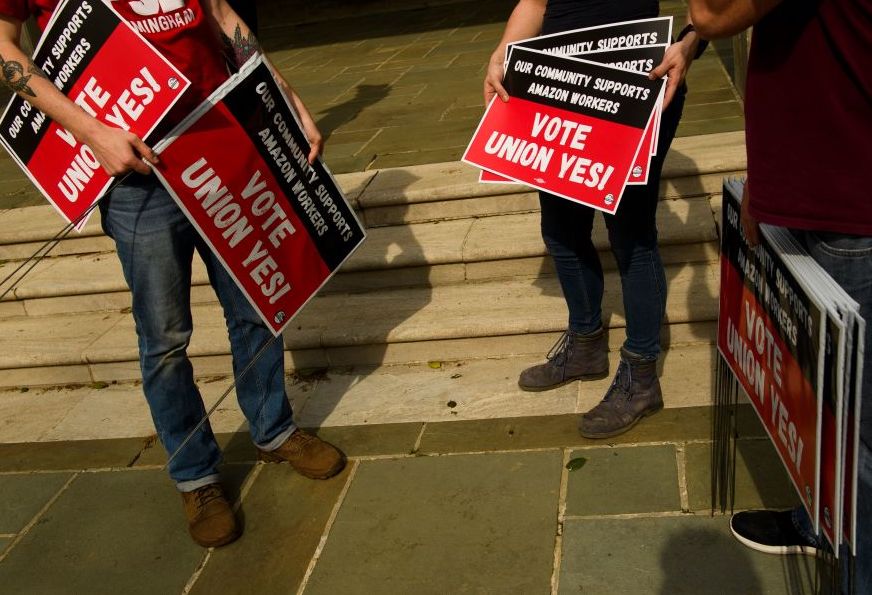
People hold “Vote Union Yes!” signs during a protest at Kelly Ingram Park on March 27, 2021 in Birmingham, Alabama. (Patrick T. FALLON / AFP via Getty Images)
A union vote appears simple and straightforward: workers either support a union or they don’t. To the extent that some of those workers are unsure about where they stand, swaying them is a matter of which side organizes better, the employer or the union. From this view, union elections seem fair.
But the defeat of the RWDSU’s union drive at an Amazon warehouse in Bessemer, Alabama, underscores how much this misses. In reality, workers and employers face very different challenges when it comes to organizing for their interests, and to do so they face what Claus Offe and Helmut Wiesenthal called two different logics of collective action.
Whether it be a union vote, a strike, or another form of working-class self-organizing, workers’ capacity to fight back hinges on their ability to maintain solidarity with each other. For employers, no such solidarity is required. Solidarity is incredibly hard to achieve and maintain for workers; not so for bosses.