The Suez Canal Is a Lifeline for Global Capitalism
The Suez Canal blockage inspired a thousand memes, but its consequences for the world economy were deadly serious. The canal has always performed a vital function for capitalist trade, and there’s no reason to think its economic and geopolitical importance is going to decline.
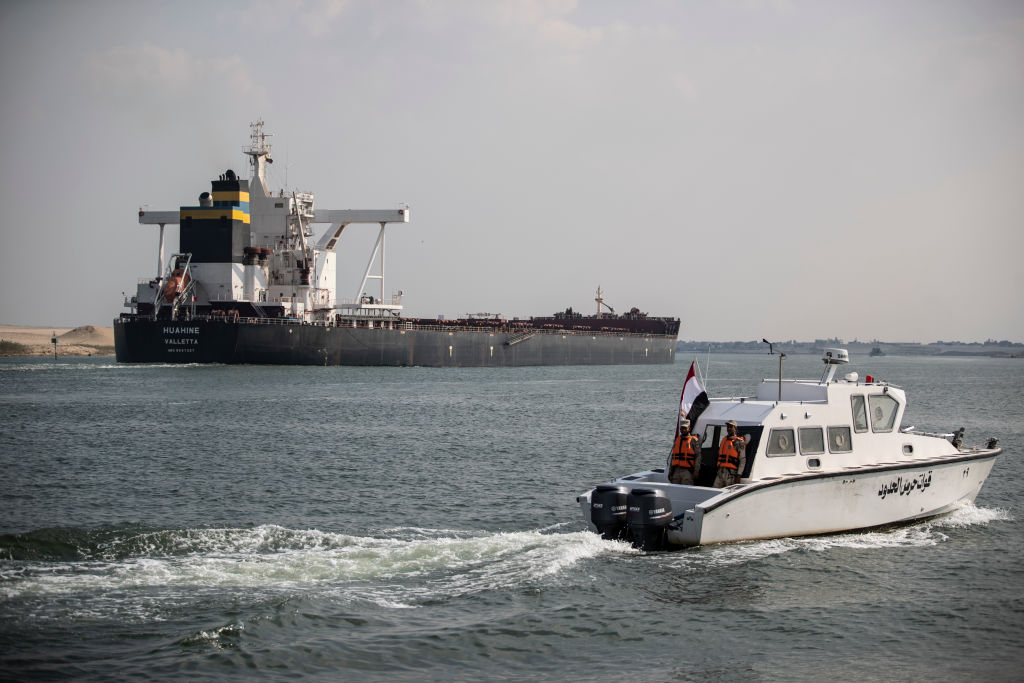
A view of the Huahine crossing the Suez Canal on March 30, 2021 in Ismailia, Egypt. (Mahmoud Khaled / Getty Images)
The blockage of the Suez Canal by the giant container ship Ever Given created a traffic jam with hundreds of ships carrying goods worth billions of dollars. German insurance company Allianz estimated that a week’s closure of the canal would cost the world economy between $6 and $10 billion.
Since its opening in 1869, the canal has been a vital channel for world commerce. Major developments in global capitalism, from the rise of the Middle East as an oil producer to the shift of manufacturing to the Far East, have only increased its importance. The canal has experienced periods of closure before as a result of political disputes in the region, and analysts have worried about its potential vulnerability to terrorist attacks. But this shutdown was the result of plain incompetence.
Laleh Khalili, who teaches international politics at Queen Mary University of London, is the author of Sinews of War and Trade: Shipping and Capitalism in the Arabian Peninsula. She spoke to Jacobin about the history of the canal and its enduring importance for the world economy.