How the Media Fools Us About Trade
On trade policy, the media has a simple rule: when trade hurts the working class, it’s good for the economy. When it hurts the ruling class, it’s bad for the economy.
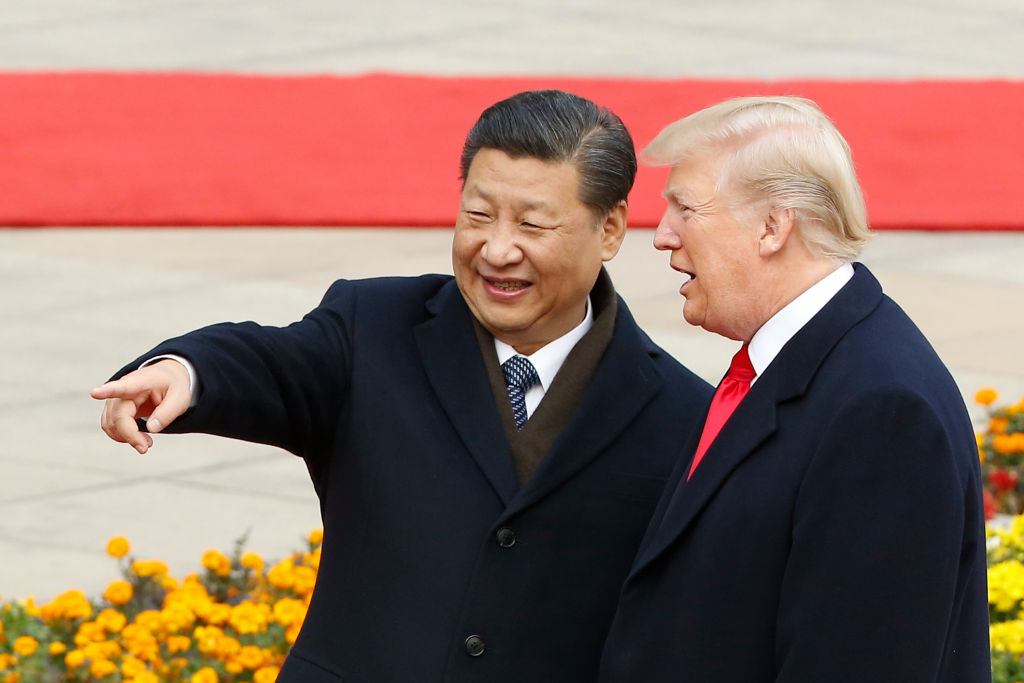
Chinese president Xi Jinping and US president Donald Trump attend a welcoming ceremony November 9, 2017 in Beijing, China. (Thomas Peter-Pool / Getty Images)
The New York Times ran an article last week with a headline saying that the 2020 Democratic presidential contenders faced a major problem: “how to be tougher on trade than Trump.” Serious readers might have struggled with the idea of getting “tough on trade.” After all, trade is a tool, like a shovel. How is it possible to get tough on a shovel?
While this headline may be especially egregious, it is characteristic of trade coverage, which takes an almost entirely Trumpian view of the topic. The media portray the issue as one of some countries, most obviously China, benefiting at the expense of the United States. The media take a somewhat different tack on this country-versus-country story, but they nonetheless embrace the nonsense Trumpian logic.
For Trump, at least in his rhetoric, the trade deficit is the central measure of winners and losers. In the case of China, its huge trade surplus with the United States ($420 billion or 2.1 percent of GDP in 2018) makes it Trumpian enemy number one. The trade deficit certainly is a problem for US workers, but this doesn’t mean that China is winning at the expense of the United States, because of “stupid” trade negotiators, as Trump puts it.