The Stimulus Bill Is a Step Toward Aggressively Fighting Poverty
The House just passed a stimulus bill that breaks the 25-year bipartisan consensus that the very poor shouldn’t be eligible for cash benefits. It’s a watershed moment — and we should build on it by turning the US welfare state into a poverty-fighting machine.
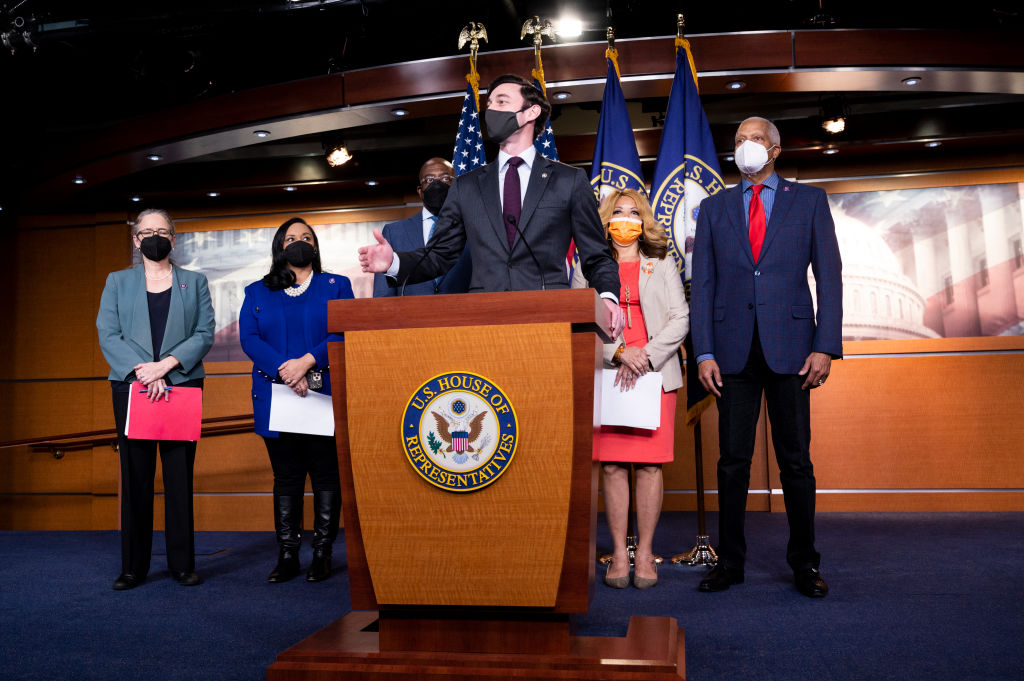
Democratic members of the Georgia congressional delegation hold a press conference on the $1.9 trillion COVID-19 stimulus package, on Wednesday, March 10, 2021. (Bill Clark / CQ-Roll Call, Inc via Getty Images)
The third big round of coronavirus legislation passed the House this afternoon and is headed for Joe Biden’s desk. Like the two prior rounds, this legislation provided much-needed cash payments to households, primarily through per-person payments administered by the IRS and a bonus payment for individuals receiving unemployment insurance. The bill also put more money into the Coronavirus Relief Fund established by the Coronavirus Aid, Relief, and Economic Security (CARES) Act, which provides fiscal support to state and local governments.
In addition to re-upping these measures, the newest bill made one-year modifications to the nation’s tax credit programs, most prominently the child tax credit (CTC) and the earned income tax credit (EITC). As a fraction of total spending in the bill, the changes to these programs were relatively small, but insofar as they point toward where the US welfare state might be headed, they are arguably the most significant.
The Reforms
The EITC was reformed as follows: