Low Wages Don’t Just Mean Poverty — They Mean Less Rights and Power on the Job
New research shows why inequality is even worse than it looks on paper. Thanks to weak leverage, the same workers who earn the lowest wages also suffer the worst violations of labor rights at the hands of employers.
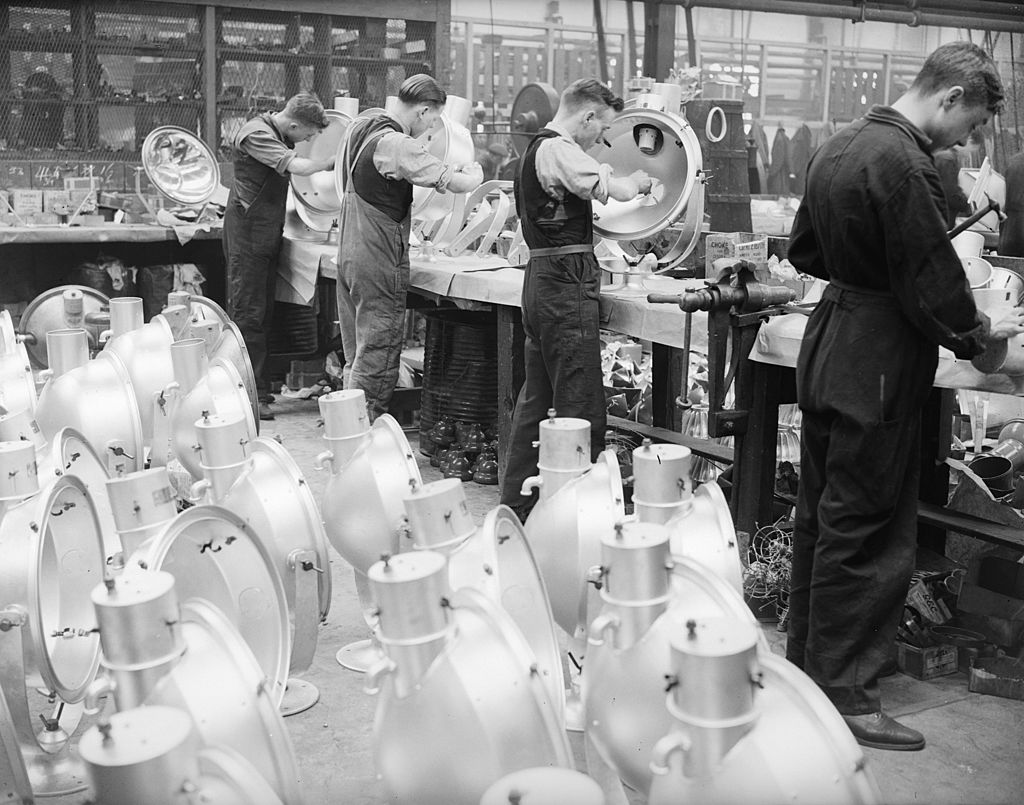
Workers at the General Electric Company make flood lights in 1935. (William Vanderson / Getty Images)
Consider two workers, write the authors of new research circulated by the National Bureau of Economic Research. These workers have identical productivity, but one has less bargaining power with her boss than the other. The worker with less bargaining power is more vulnerable to the employer’s whims and less able to fight back against them. She’ll have lower pay, of course, but that’s not her only problem.
An employer might claim greater value from the employment relationship both by paying lower wages and by violating the worker’s labor rights, such as requiring work in unsafe or unhealthy conditions (OSHA), shorting on overtime pay (WHD), or discouraging union organizing by threatening to fire union sympathizers (NLRB).
Low pay and violations of her rights: the two conditions go hand in hand. That’s the conclusion Ioana Marinescu, Yue Qiu, and Aaron Sojourner reach in their paper, “Wage Inequality and Labor Rights Violations.” As Marinescu told MarketWatch, the findings suggest that prior research on wage inequality “understates the true level of inequality since workers who get paid less are more likely to have their rights violated.”