The Era of Austerity Should Never Return
For years, we were given reactionary tropes about welfare queens and the need to cut the deficit. But now there’s popular recognition that state action is needed to boost the economy and help working people. We need to make sure that the age of deadly austerity never comes back.
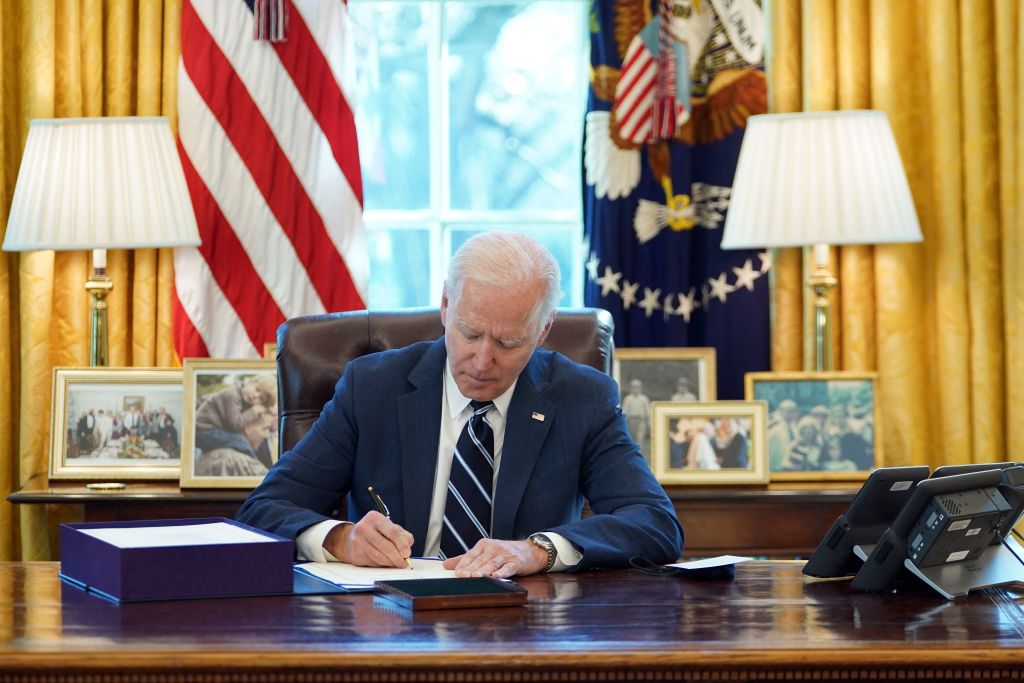
President Biden signs the American Rescue Plan in the Oval Office on March 11, 2021. The New York Times called the legislation the “largest antipoverty effort in a generation.” (Mandel Ngan/AFP via Getty Images)
Joe Biden’s $1.9 trillion COVID relief bill has prompted a spirited debate across the Left. Given its size and scope, it’s difficult to deny that key provisions will have a positive impact in many areas of concern for progressives and socialists alike. With direct cash payments and temporary expansions of tax credit programs like the child tax credit (CTC) and the earned income tax credit (EITC), the legislation has even been called the “largest antipoverty effort in a generation” by the New York Times.
To what extent are these pronouncements accurate? What does the bill herald for poverty and homelessness across the United States? And does it represent an anomaly born of out of crisis or a historic shift toward a kind of activist government not seen since before the Reagan era?
Stephen Pimpare is a director of the Public Service and Nonprofit Leadership program at the University of New Hampshire at Manchester, a historian of poverty and social policy, and the author of several books, including The New Victorians: Poverty, Politics, and Propaganda in Two Gilded Ages and A People’s History of Poverty in America. Jacobin’s Luke Savage spoke to Pimpare about the stimulus’s potential impact on poverty and why it may, in fact, signal a real shift in the long-standing bipartisan consensus around social policy.