Education Should Be About Building Democratic Citizens, Not Compliant Workers
In South Africa, as in so many other capitalist countries, the education system is seen as a means of molding children into future workers. But education should be about building democratic citizens, not producing compliant workers for employers.
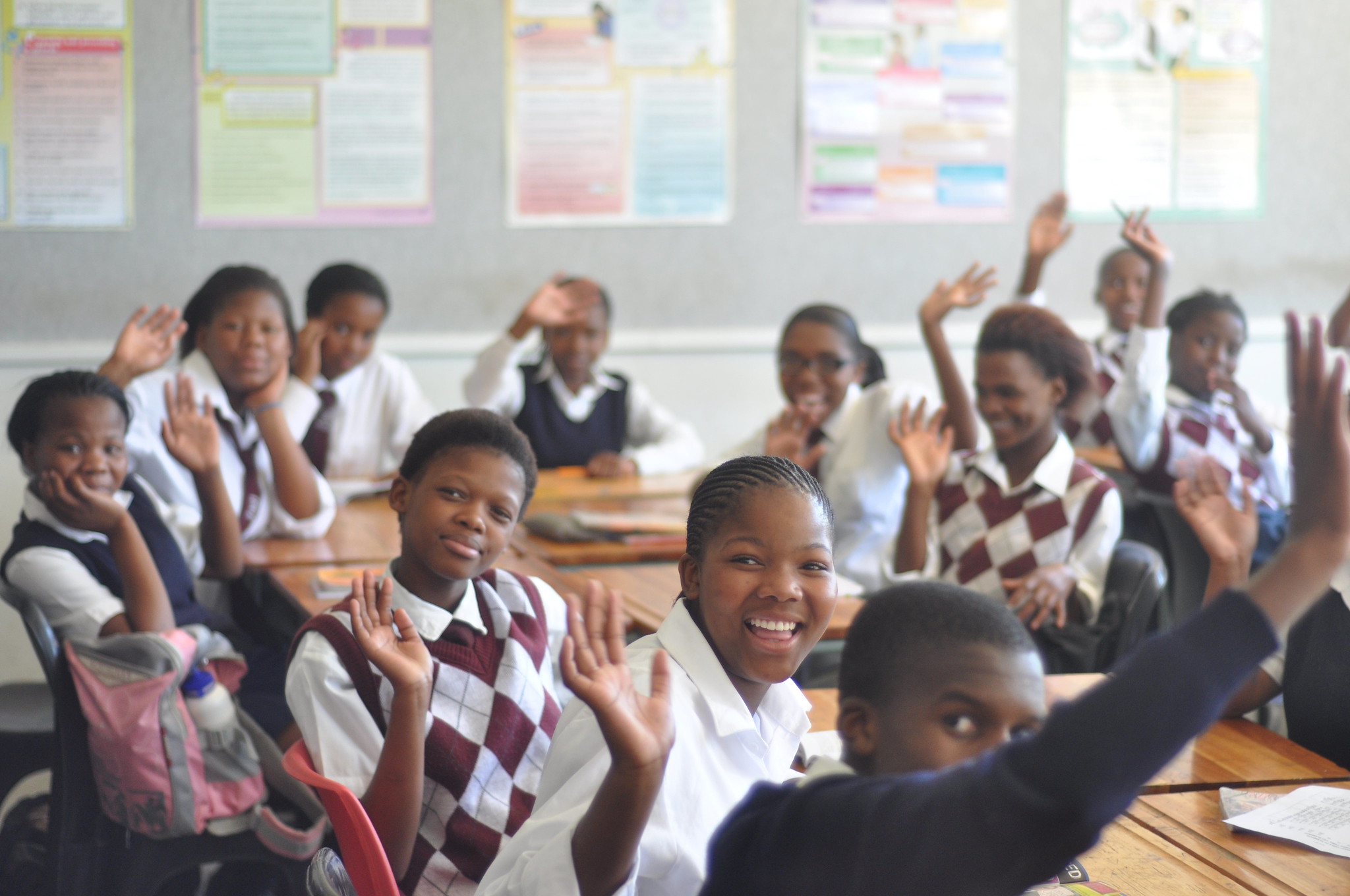
Students at Kayamandi High School in Western Cape, South Africa. (Megan Trace / Flickr)
Every year in early January, South Africans ritualistically take part in unveiling matric results — the exam scores of final-year high schoolers — from both private and public schools. For the most part, it’s a couple of weeks overflowing with feel-good stories about the hard work of students. For many private schools, their learners and teachers gleefully grace television screens and newspaper front pages to bask in public praise. In 2020, just over 12,000 students wrote the Independent Examinations Board (IEB) examinations, achieving a 98.82 percent pass rate.
It’s a mixed narrative for public schools, who fielded 578,468 learners last year to write the government-issued National Senior Certificate (NSC) exam, of which 76.2 percent passed. While the spotlight tends to hover on feel-good stories about students shackled in adversity who muster their meritocratic will to accomplish impressive results, we are also sorely reminded of the stark differences in performance between private and public schools, and among the latter, free and fee-paying ones. The recycled talking point is often around sluggish and unsatisfactory improvements, blamed on the government’s mismanagement of the education sector. Opposition parties never fail to hammer in the charge that the dismal state of our public education system forms part of the ruling African National Congress’s (ANC’s) long-standing failure to competently deliver public services.
Unlike every other year, this year’s fanfare happened in February, owing to how COVID-19 disrupted the academic year, and resulting in a more somber tone. The class of 2020 spent almost six months of the academic year at home due to lockdown, with public schools having slowed reopenings due to repeated concerns around the appropriate safety measures being in place. By contrast, well-resourced private schools adjusted to the new world of physically distanced and online learning with few scratches. It’s easy to say that the pandemic has laid bare the extent of inequality in South Africa, but it’s harder to ask what we should do about that. The instinct to point out the profound injustice of some learners moving along the academic year with little disruption, while others are at the whim of material circumstances not of their choosing, is the correct one. But the South African public hardly reaches the natural conclusion that we should — which is that private schools should probably not exist to begin with.