The Rohingya and the World
Ending Myanmar's ethnic cleansing of the Rohingya will require confronting both local elites and foreign capital.
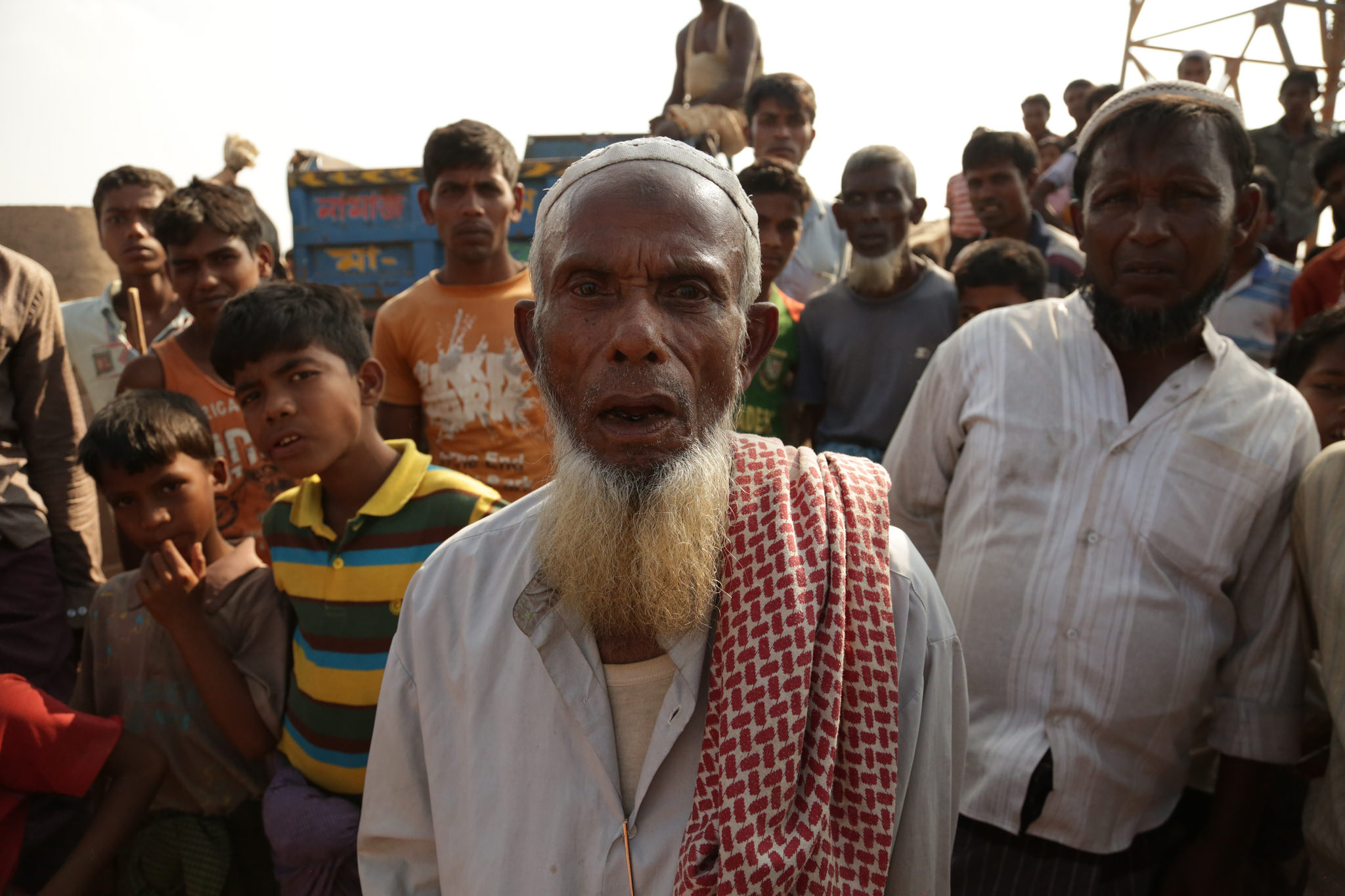
An elderly Rohingya man in the Kutapalong camp near Cox’s Bazar, Bangladesh, November 25, 2017. Russell Watkins / Department for International Development
In Myanmar’s ongoing massacre of the Rohingya — a two-million person strong Muslim minority — the country’s military has burned hundreds of villages, destroyed thousands of homes, and slaughtered 6,700 people. Gang rape, torture, and infanticide have punctuated the egress of the Rohingya, more than 660,000 of whom have fled from northwestern Rakhine state into Bangladesh. These obscenities have not been occasional excesses but rather, according to a United Nations Human Rights investigation, part of a “consistent, methodical pattern” — an ethnic cleansing.
The horror, in its seeming boundlessness, feels alien. And yet, in its popular renderings, there is also something all too familiar about it. The images of Rohingya enduring injustice blur with images of other groups, enduring other injustices in other places.
Critic Suchitra Vijayan argues that a Guardian photo essay “completely reduces the politics of Rohingya exodus to ‘captivating’ theatre.” An Intercept photo essay asserts that “the best one can say” about the complex Rohingya identity is that it is “rooted in fluctuating kingdoms, Muslim conquests, colonialism, nationalist movements, ethnic cleansing.” Where this statement isn’t simply incorrect (“Muslim conquests,” whatever that could mean, were not part of the area’s history), it is vague to the point of meaningless, revealing the writer’s disinterest in the actual conditions that produced the crisis.