Red London in Tory Britain
Few major cities have welcomed the world’s oligarchs and kleptocrats like London has. Yet nestled within the neoliberal dystopia, London’s neighborhoods reflect the long and ongoing struggle to transform Britain’s capital into a self-managed, social-democratic municipality for its residents.
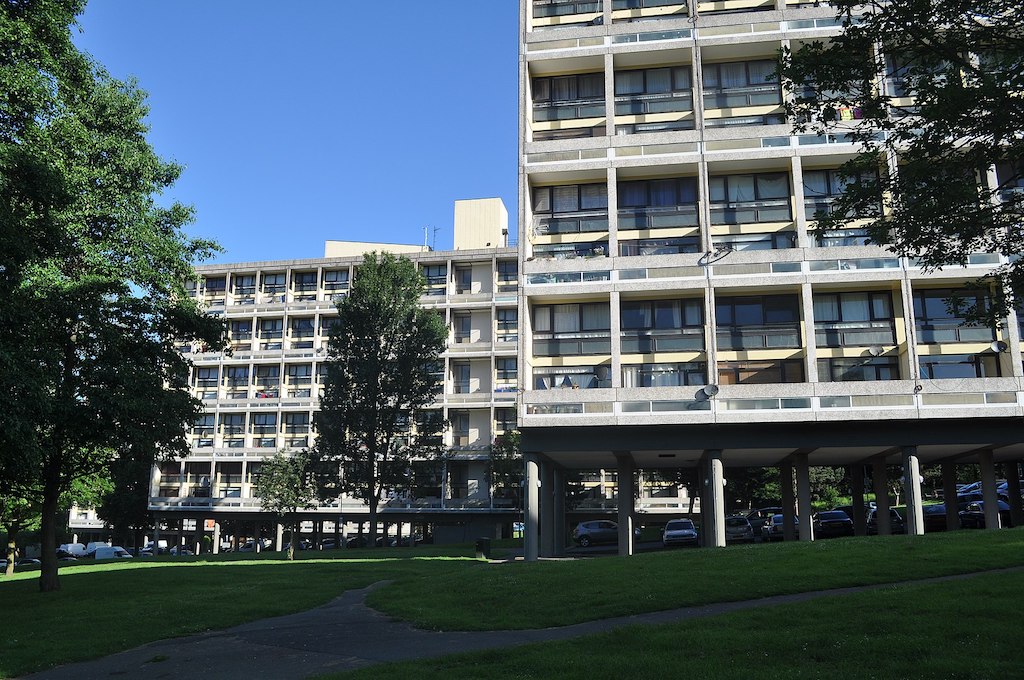
Alton West in London is among the greatest social housing developments of the twentieth century. (Wikimedia Commons)
Here’s a piece of unsolicited advice for campaigners and council members working to shape the cities in which they live: don’t be like London. No other capital has been so welcoming to the world’s oligarchs and kleptocrats. No other metropolis has been as thoroughly hollowed out by vacant second or third homes. No other city has created such a well-oiled machine for simultaneously exploiting and displacing working-class households. London is so frequently invoked as a global icon that it’s easy to miss how often it sets a bad example.
And yet the single most important fact about London is that while it is unjust, it is not reducible to its injustices. The city has a democratic energy that can be seen throughout its history. This is the spirit that animates the activist campaigns, community projects, self-managed spaces, and subcultural experiments found in every borough. The glitzy megaprojects and loopy skyscrapers that have sprouted up across London since the 1980s are really just variations on the generic architecture of wealth. It’s the ordinary neighborhoods, everyday streets, public spaces, and council estates that are the true heart of London’s urbanity.
The city’s enduring egalitarian spirit is apparent in the long history of Londoners trying to transform their city into a self-managed, social-democratic municipality. It is this London that is the subject of Owen Hatherley’s new history of municipal socialism in the British capital, Red Metropolis. The book appears at a moment when the prospects both for the Left and for cities are dimmer than they have been in years. Between the coronavirus pandemic, Brexit, the Conservative Party’s trouncing of Labour in the 2019 election, the resurgence of far-right extremism, and the ongoing agonies of housing insecurity and precarious work, the mood in London is exceptionally grim.