John Lennon and the Politics of the New Left
Forty years after his murder in New York City, we remember John Lennon’s record of political engagement as a champion of the anti-war movement and a self-styled “instinctive socialist” — which brought him into conflict with Richard Nixon and J. Edgar Hoover.
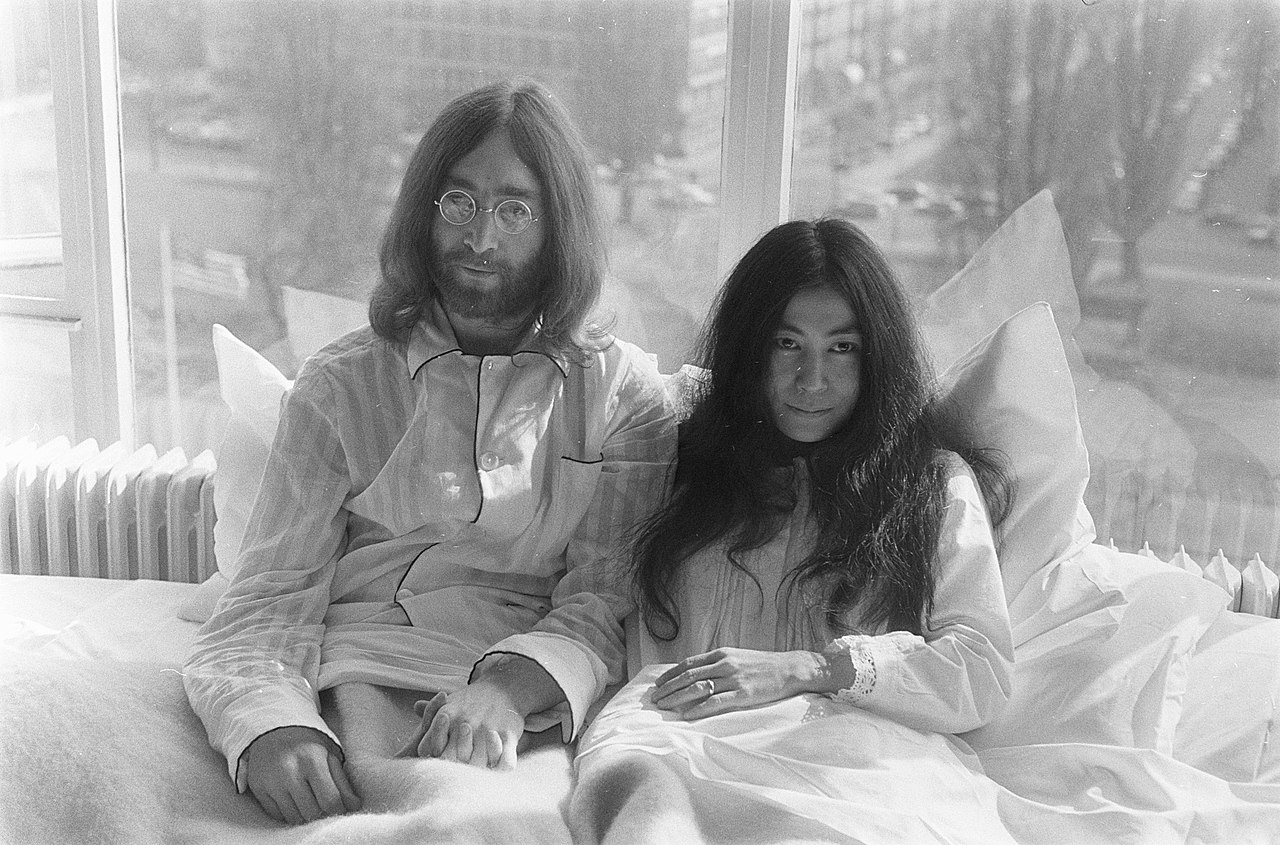
John Lennon and Yoko Ono at their “bed-in for peace” in Amsterdam’s Hilton Hotel in 1969. (Eric Koch / Anefo)
When John Lennon was murdered forty years ago, on December 8, 1980, we believed Richard Nixon had been the worst president ever — because of the war in Vietnam, because of the repression that he called “law and order” and the racism of the Southern Strategy, and also because of his treatment of Lennon. Nixon had tried to deport Lennon in 1972 when the former Beatle made plans to lead an election-year effort to challenge the Republican president’s reelection with a campaign to register young people to vote.
In the end, of course, Lennon stayed in the United States and Nixon left the White House in disgrace. But the seemingly endless battle in the immigration courts ruined his life for the next few years. To recover, in 1975 he left Los Angeles, where he’d been living apart from Yoko Ono in a kind of exile, and returned to New York and the Dakota.
He and Yoko had a son, and he declared himself a househusband. He stayed out of sight for five years, then returned to music and public life with a new album, which opened with the glorious song “Starting Over.” Then he was shot and killed by a deranged fan.