The Dark Money That’s Corrupting Politics Is a Twist on an Old Story
The corruption of British politics by corporate “dark money” is part of a global phenomenon. But we can’t make sense of that trend without recognizing that capitalist oligarchies have always sought to undermine genuine democracy.
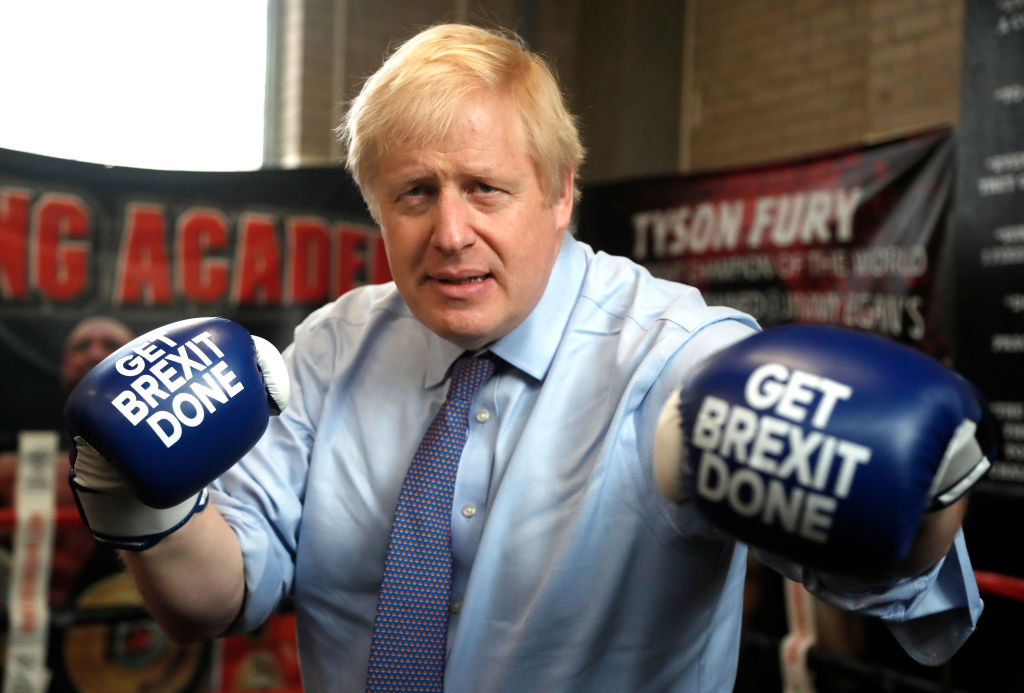
Britain’s prime minister, Boris Johnson, wears boxing gloves emblazoned with “Get Brexit Done” during a stop in his general election campaign trail in Manchester, England. (Frank Augstein – WPA Pool / Getty Images)
From the “rotten boroughs” of the early nineteenth century to the “Cash for Honours” scandal of the 2000s, patronage, nepotism, and grift have always been part of British political culture. But in recent years, the problem of corruption in UK public life seems to have intensified — or, at least, become more visible.
According to journalist Peter Geoghegan, in his best-selling new book, Democracy for Sale, this shift reflects the growing “Americanization” of British politics. Anonymous donors hold sway over the major parties, the Conservatives in particular; dark money has pushed radical fringe agendas into mainstream debate; lies and disinformation are now common currency among Westminster legislators.
Geoghegan sees Brexit as a tipping point. His research into dark money was sparked by a £435,000 donation made during the 2016 referendum and channeled through the Democratic Unionist Party in Northern Ireland in order to bypass campaign spending limits in the rest of the UK. The payment was eventually traced back to the Constitutional Research Council, an obscure Eurosceptic outfit and so-called unincorporated association with almost no physical or digital footprint.