Robert Fisk Was a Reporter Who Brought the Wars Home and Shaped the Thinking of a Generation
British journalist Robert Fisk, who died last week, produced decades of outstanding work, from Ireland to the Middle East. His greatest impact on public opinion came after 9/11, when he mounted a brave challenge to the wars in Afghanistan and Iraq.
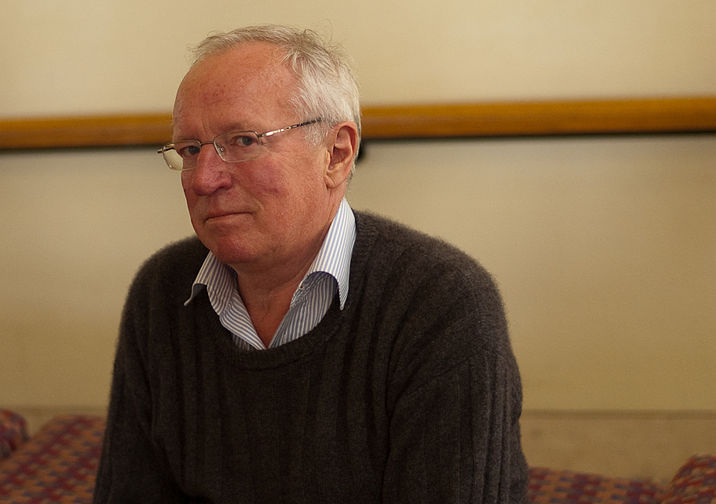
Robert Fisk, who worked as a Middle East correspondent for the Independent, has died in Dublin at the age of seventy-four. (Mohamed Nanabhay / Wikimedia Commons)
When word got out last weekend that the veteran British journalist Robert Fisk had died in a Dublin hospital, one of the strongest expressions of sympathy came from the president of Ireland, Michael D. Higgins.
I knew that his taking of Irish citizenship meant a great deal to him, and his influence on young practitioners in journalism and political writing was attested by the huge audiences which attended the occasions on which he spoke in Ireland. Generations, not only of Irish people but all over the world, relied on him for a critical and informed view of what was taking place in the conflict zones of the world and, even more important, the influences that were perhaps the source of the conflict.
Michael D (as this popular president is invariably called in Ireland), who himself rose to fame as an excoriating critic of US imperialism, was always bound to emphasize Fisk’s Irish connection. But this was not some opportunistic “one of our own” blather: Fisk’s influence in Ireland was profound.