Rossana Rossanda Wanted a Party of and for Workers in Struggle
- David Broder
Rossana Rossanda died last month after decades of commitment to first the Italian Communist Party and then the dissident manifesto group. She insisted that a left party should be shaped by the demands of workers' everyday struggles.
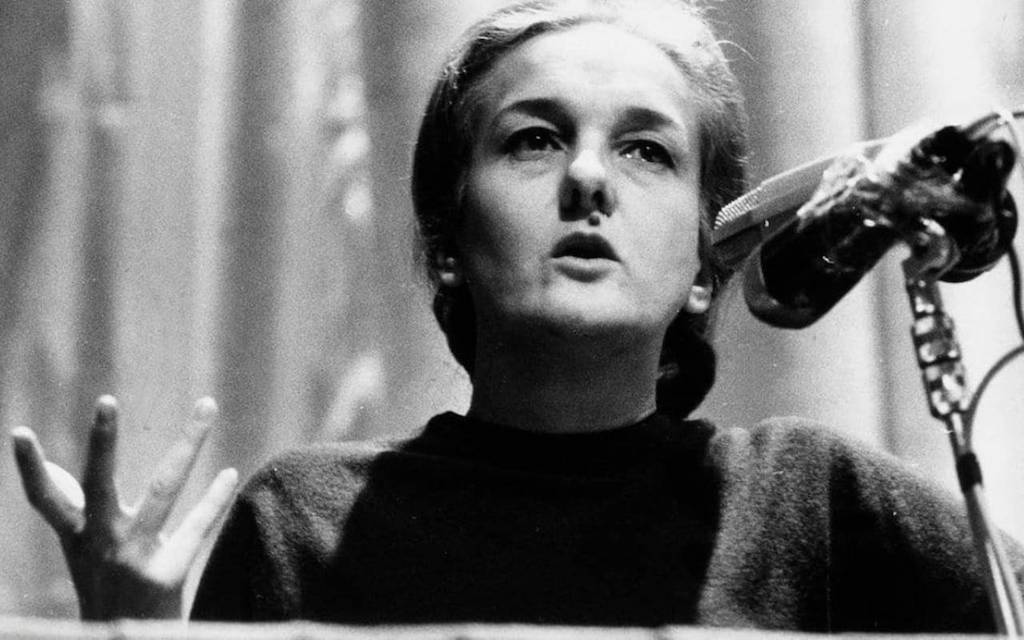
In theorizing the working-class party, Rossana Rossanda sought not to turn from Marx to Lenin, or from Marx to Gramsci, but rather to turn back to Marx himself.
Rossana Rossanda, who died aged ninety-six in September, was one of the figures who did most to inspire and lead Italy’s dissident-communist manifesto group. Its peculiar history, especially after its main leaders were kicked out of the Communist Party (PCI) in 1969, was characterized by its new and original approach to the role the working-class party should play in the process of political and social transformation. In particular, its discussions set this theme in relation to the mechanisms that could drive the formation and definition of political consciousness among the working class itself.
Such debates returned attention to the tangled question — a fundamental issue ever since Lenin’s 1902 text What Is to Be Done? — of the relationship between spontaneity, consciousness, and organization. Italy’s 1970s were an especially important testing ground for these debates, given both the upsurge in working-class militancy and the hesitating response of the near-two-million-member PCI. But even within the manifesto group this gave rise to two essentially different political-strategic proposals, as articulated by Rossanda and her comrade Lucio Magri, best known to Anglophone audiences as author of The Tailor of Ulm.
Heresy and Dissent
What became the manifesto group had begun to emerge already at the start of the 1960s, as a cultural tendency within the PCI close to the positions of Pietro Ingrao, who was then a leading figure in the party. As the PCI handled the end of longtime secretary Palmiro Togliatti’s leadership, with his death in 1964, Ingrao would be the main leader of the party’s internal left wing. At its eleventh congress he promoted an “alternative development model” opposed to that of the Right’s leader Giorgio Amendola.