The Disaster of Privatized Banking in Mexico
Since the 1990s, Mexico’s banks have been privatized, bailed out, and sold off, resulting in a massive upward transfer of wealth. The AMLO administration is introducing a public option for basic banking, but it must go further to rein in the untrammeled power of the banks.
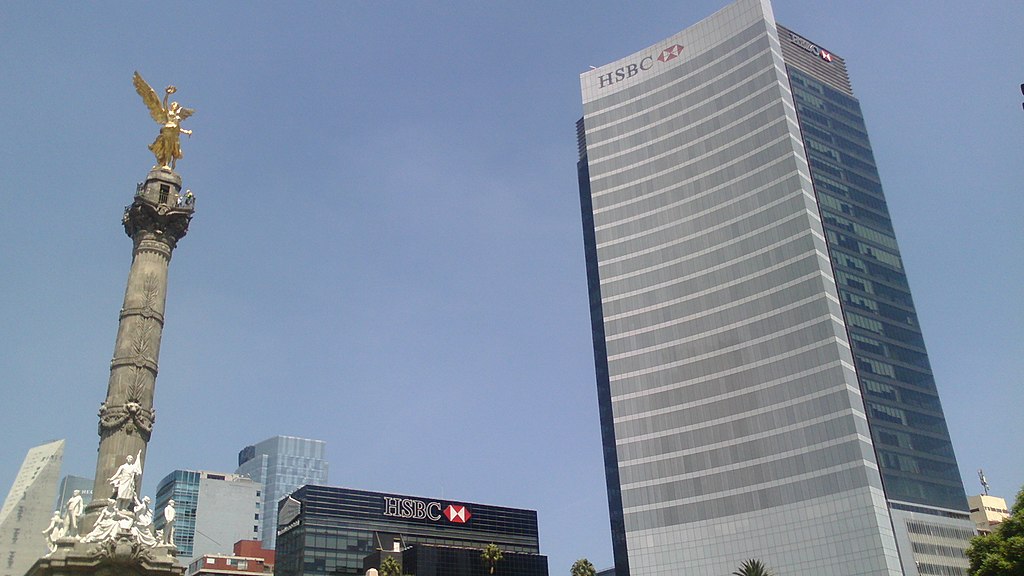
The HSBC tower in downtown Mexico City. (Wikimedia Commons)
Act I
In 1990, as part of a massive denationalization drive, President Carlos Salinas de Gortari of the Institutional Revolutionary Party (PRI) moved to amend the Mexican Constitution to allow for the privatization of banking and credit institutions. Once the measure was approved, his administration moved swiftly: between June of 1991 and July of 1992, some fifteen banks were sold off, a rate of more than one a month. As the newspaper El País reported at the time, the justification made for the “surprise” move was to bring down the debt and deficit while freeing up funds for development. “Mexicans cannot admit such a property-owning state with such considerable resources invested in the banks,” argued the Salinas administration, “in a nation with such deficiencies and needs and basic social urgencies.”
Underneath the rhetoric of concern, however, the banks were being handed over to a select number of magnates by means of a sham bidding process in which the second-place competitor of one tender was the next in line for the subsequent one, and so on. By means of this colossal boon, the Salinas administration could swell the roster of multimillionaires whose fortunes had been made on the dismantling of the Mexican state.