Karl Kautsky Was Once a Revolutionary
Lenin’s famous denunciation of Karl Kautsky as a “renegade” has long discouraged Marxists from actually engaging with the German-Austrian socialist’s writings. But if the Bolshevik leader sharply criticized Kautsky’s retreats, this was also because of his great admiration for his earlier work — a revolutionary Marxism that lay decisive stress on the battle for democracy.
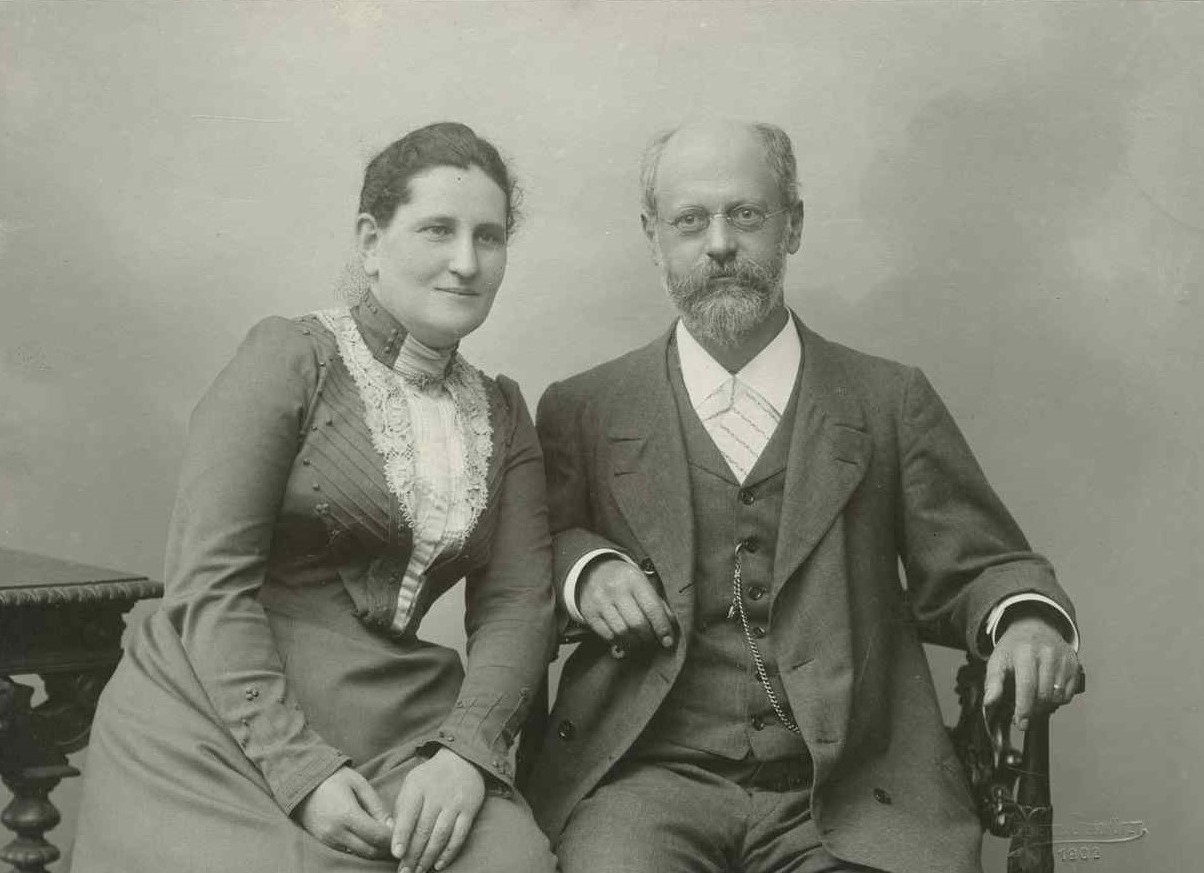
Luise and Karl Kautsky in 1902. (Photo: Rosaluxemburgblog / International Institute for Social History, Amsterdam)
Variously known as the “pope of Marxism” — or, in Lenin’s famous words, a “renegade” — Karl Kautsky remains one of the most controversial figures in post-Marx Marxism. A famous popularizer of Marxist ideas in the late-nineteenth-century Second International and German Social Democrats (SPD), after World War I, Kautsky became a sharp critic of the Bolshevik Revolution — and was himself damned by the main currents derived from Leninism. While Kautsky’s works have drawn renewed attention from historians in recent decades, these reappraisals are themselves highly diverse, spanning everything from the attempt to retrieve an early, revolutionary period, to positive portrayals of Kautskyan anti-Bolshevism.
Ben Lewis is a scholar of German social democracy whose Marxism Translated project aims to make classic German-language Marxist works available in English. He is also translator and editor of Karl Kautsky on Democracy and Republicanism, issued as part of Brill’s Historical Materialism Book Series in 2019 and this week published in an affordable paperback edition by Haymarket. He spoke to Jacobin’s David Broder about Kautsky’s understanding of socialist revolution, the specific emphasis he placed on democratic-republican demands, and the importance of combating commonplace misrepresentations of his ideas today.
David Broder
Your introduction, like other recent scholarship, rejects the myth of Kautsky the reformist. Like Lars Lih, you emphasize that Lenin’s denunciation of the “renegade Kautsky” in 1918 counterposed him precisely to his earlier record “when he was a Marxist.” Could you tell us about Kautsky’s role in the pre-1914 workers’ movement? I’m particularly interested in your thoughts on claims that his role as a “continuator” or “popularizer” entailed a debasement of Marx’s ideas.
Ben Lewis