Propping Up Bondholders and Letting Down the Global Poor
International financial institutions and G20 countries have constructed a partnership to benefit private finance at the expense of the citizens in poor countries. We need a radically different development model.
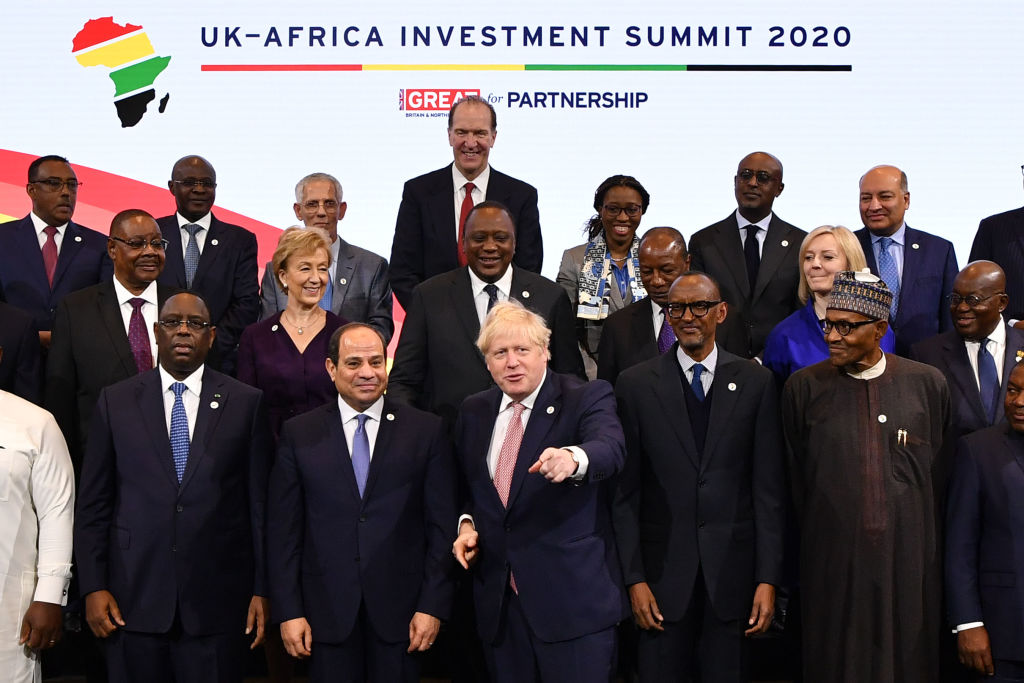
World leaders from the African continent pose with British prime minister Boris Johnson at the start of the UK-Africa Investment Summit on January 20, 2020 in London, England. (Ben Stansall — WPA Pool / Getty Images)
Yesterday, central bank governors and finance ministers of the Group of Twenty (G20) met for the last time this year. They did not solve one pressing issue: poor countries are being pulled between funding public health responses to the pandemic, and making debt payments to their private bondholders.
When the G20 and Paris Club of major public creditors agreed on a Debt Service Suspension Initiative in April 2020, they had hoped that the private sector would voluntarily join official creditors in the suspension of payments. But such hopes were misplaced. Private creditors refused to provide temporary liquidity relief.
The implications are far more serious than the ongoing squabbles led by the United States over whether Chinese state-owned banks should join the initiative. Indeed, it is estimated that China has provided roughly half of all relief negotiated this year. By refusing to impose mandatory private participation, the G20 places the financial burden of the pandemic on the shoulders of taxpayers in both rich and poor countries. It cements an unequal power relationship, which poor countries have no instruments for challenging and their private creditors have few qualms in exploiting.