We Can’t Trust the IMF and World Bank to Lead the COVID-19 Recovery
Despite decades of protests against them, the IMF and World Bank continue to force the same discredited neoliberal policies on poor governments and their people. Countries in economic distress desperately need alternative sources of aid that won't demand adherence to free-market orthodoxy.
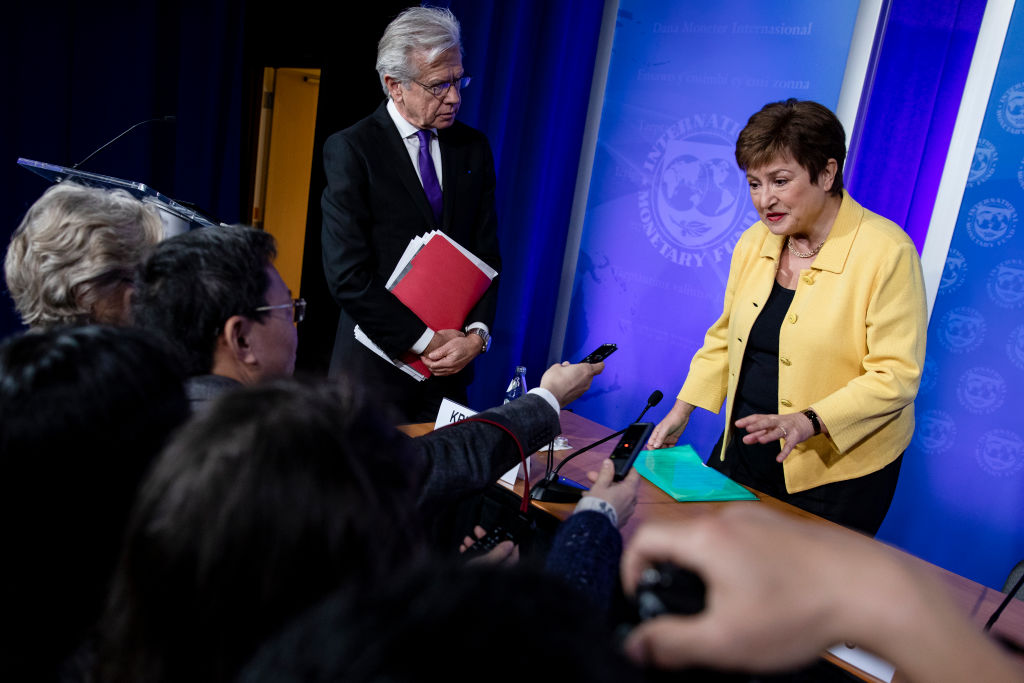
IMF managing director Kristalina Georgieva takes additional questions from reporters following a joint press conference with World Bank Group president David Malpass on the recent developments of the coronavirus, COVID-19, and the organizations’ responses on March 4, 2020 in Washington, DC. Samuel Corum / Getty
The International Monetary Fund (IMF) and World Bank played a central role in shaping our current model of globalization, imposing policies that held countries back from climbing up the income ladder, weakened health systems, and subordinated development outcomes to the whims of private capital. As the vulnerabilities of this model are yet again laid bare, now through the crisis caused by COVID-19, the institutions are portraying themselves as experts that stand ready to guide the world through this crisis.
This rebranding strategy is not new. For decades, shifts in rhetoric and superficial reforms have allowed the IMF and World Bank to deflect criticism and avoid accountability for the damage they have caused around the world. These successful communications strategies have also earned the institution favorable coverage throughout the current crisis, when the media has focused on their stated commitments to support the recovery, failing to mention their dismal track record of economic projections, or the disastrous results of their past policy interventions.
The IMF has stepped up to provide about a hundred countries with much-needed emergency financing and has advocated for debt moratoriums. Going even further, the IMF has encouraged countries to spend more on their health systems and social protections. These actions have garnered glowing coverage of the institution, which has mostly escaped scrutiny over decades of demanding cuts in spending in those same areas. Yet as it now encourages countries to spend more, there is no indication that once countries transition from relatively small emergency loans into full-fledged programs, the IMF would not again shift to its old playbook of austerity and deregulation. It did so when developing its loan programs in the aftermath of the global financial crisis, after initial calls for more stimulus. Its most recent Fiscal Monitor hints that once the virus is defeated, countries need to return to fiscal consolidation.