The Two Souls of East German Socialism
- Lisa Vogel
Throughout the history of the German Democratic Republic, its leaders faced opposition from dissenters who believed that a socialist system needed to have democratic rights. The arguments they made — often at great personal cost — still resonate today.
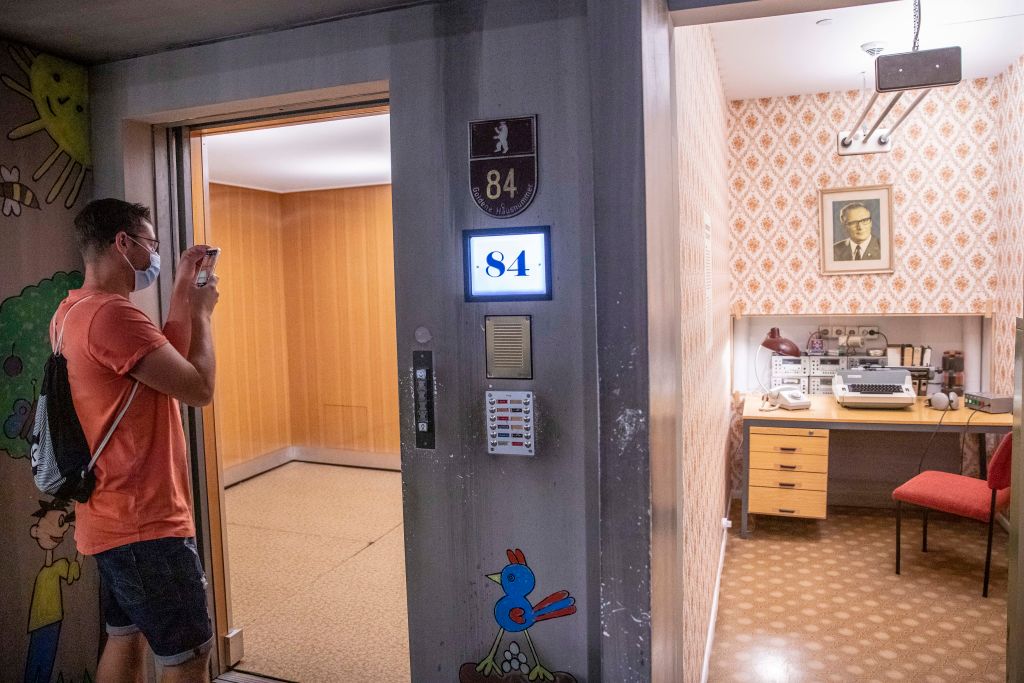
A visitor at an exhibition that shows what everyday life was like in the former German Democratic Republic (GDR) at the DDR Museum on September 15, 2020 in Berlin, Germany. (Maja Hitij / Getty Images)
Rather little is known about intellectual life in the German Democratic Republic (GDR), or East Germany. Popular culture most often associates it with the secret police known as the “Stasi” — as in the award-winning 2006 feature film The Lives of Others, which centers on a member of the secret police tasked with keeping tabs on critical intellectuals. Over the course of the film, he undergoes a highly unrealistic transformation and develops sympathies for the objects of his observations, whom he eventually protects from state repression.
In spite of all the justified criticism of the movie’s plot, director Florian Henckel von Donnersmarck still managed to accurately illustrate one thing: the existence of two groups who understand themselves to be on the political left, but are nevertheless resolutely opposed to one another.
On one side was the GDR’s state socialist apparatus, willing to enforce its claim to exclusive authority over socialism even by means of repression — until the whole system eventually had little to do with what left-wing intellectuals and artists had imagined socialism to be in the first place. Those intellectuals and artists were, for their part, attempting to outsmart the state, whether in their fight against censorship, or by means of conspiratorial discussions about literature, Western culture, or oppositional left-wing theorists.