Bertolt Brecht’s Refugee Conversations Is a Book for Our Times
The German playwright and poet Bertolt Brecht died on this day in 1956. His newly released book Refugee Conversations draws on his own years in exile to tear apart the anti-immigrant politics which still plague us today.
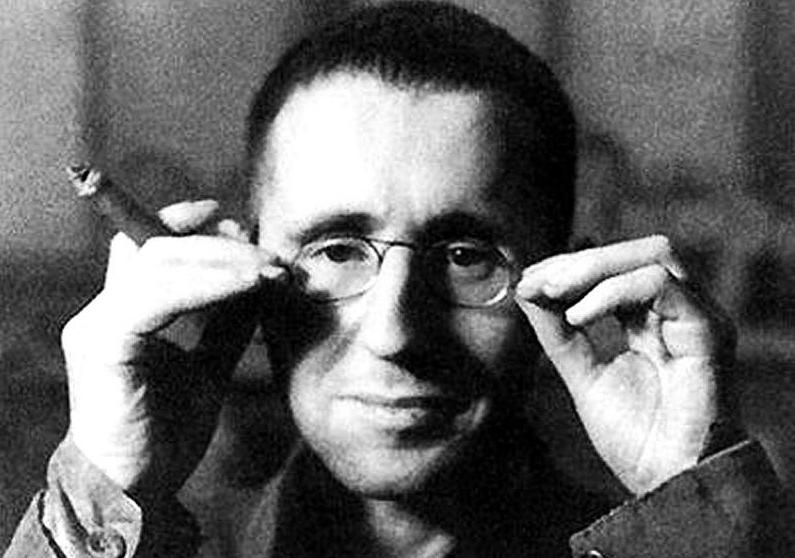
Bertolt Brecht.
A new piece by Bertolt Brecht? Yes, and it’s about time. His Refugee Conversations was published in fall 2019 by Bloomsbury Methuen in a new, complete, and long overdue translation by Romy Fursland, filling a gap in the Anglophone edition of Brecht’s works. Conceived in the tradition of the dialogue novel — in this case, Brecht was most obviously inspired by Denis Diderot’s late eighteenth-century satirical novel Jacques the Fatalist — the conversations unfold between two German exiles in Finland, fleeing the juggernaut of Hitler and his advancing army: Ziffel, a talkative bourgeois intellectual, and Kalle, a less voluble but nonetheless sharp-thinking prole.
Although Brecht never completed the series of conversations for publication, this is not really a fragmentary text, but a work in progress. As presented in this edition, it consists of nineteen numbered dialogues between Ziffel and Kalle, two refugees who meet on an occasional basis for an undefined number of weeks at a train station café in Helsinki.
Their conversations consist of encounters between two constructed, literary figures, and their meetings are intellectual conversations carried solely by the dialogue. There are no “dramatic” elements, and the “plot” is sparse, reduced to the almost ritualistic entries and exits framing each section.