Let’s Stop Talking About the “Overton Window”
Socialists should be making well-thought-out proposals for a better future and building the class power to bring that program into reality. The idea that our purpose is simply “shifting the Overton window” by spouting the most radical-sounding slogans is an unhelpful distraction.
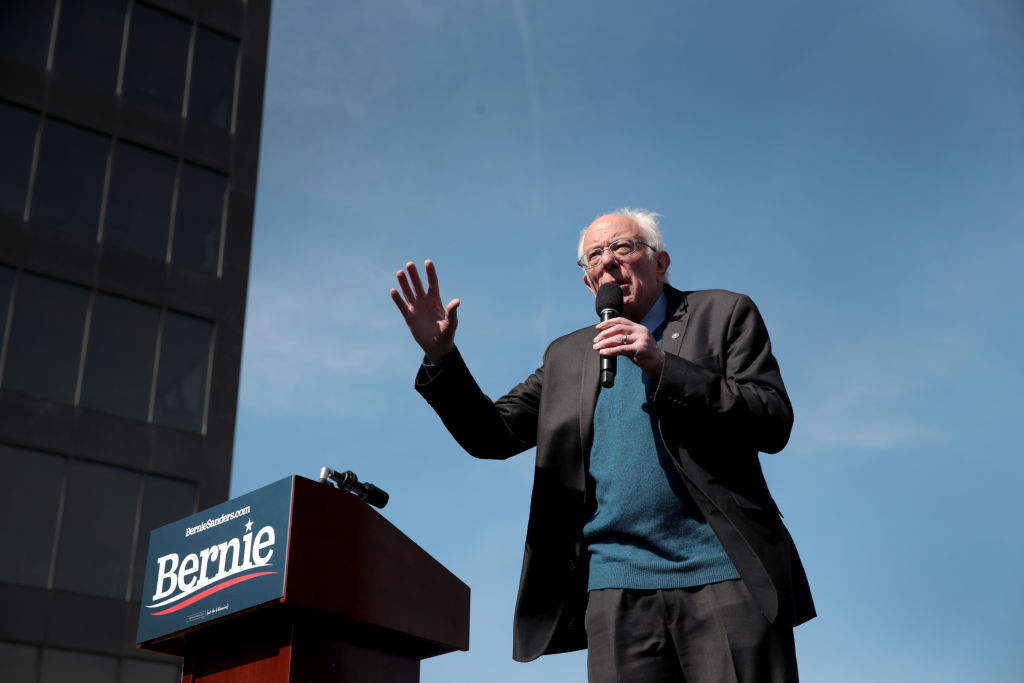
It’s important for radicals to work to make what’s currently unthinkable thinkable. But that’s not so we can “shift the Overton window” so far that something halfway between those unthinkable horizons and the miserable present can become politically possible. It’s so that we can actually achieve the kind of “unthinkable” future that we desperately need. (Scott Olson / Getty Images)
If you’ve been involved in left politics in the last four years, you’ve probably heard a lot about “the Overton window.” We’ve been told that Bernie Sanders has shifted the Overton window with his social-democratic policy proposals, that Bernie and Trump have jointly managed to “break” the Overton window, and that radical slogans like “abolish the police” must be supported by anyone who wants any sort of police reform because it “shifts the Overton window” in the right direction.
Sometimes, people who use these phrases are making a purely descriptive claim. Shifts occur in which ideas are widely discussed by political commentators. In 2014, for example, only a handful of prominent figures were foregrounding single-payer national health insurance. Now everyone who talks about politics for a living has said something about whether “Medicare for All” is a good idea. This in turn has helped spur centrists to develop proposals that lie somewhere in between Medicare for All and the health care laws currently on the books.
No one denies that shifts of this kind happen. The question is why they are happening — and how consequential to real politics these evolutions are. Can “shifting the Overton window” help the Left get closer to achieving our goals?