After the Coup, Mali Needs a Change of Direction, Not Just a Change of Leadership
Last week’s coup in Mali came after weeks of protest against an unpopular, autocratic ruler, but the intentions of the junta leaders remain unclear. The country now badly needs to address deep-rooted problems of the Malian state that have been neglected for much too long.
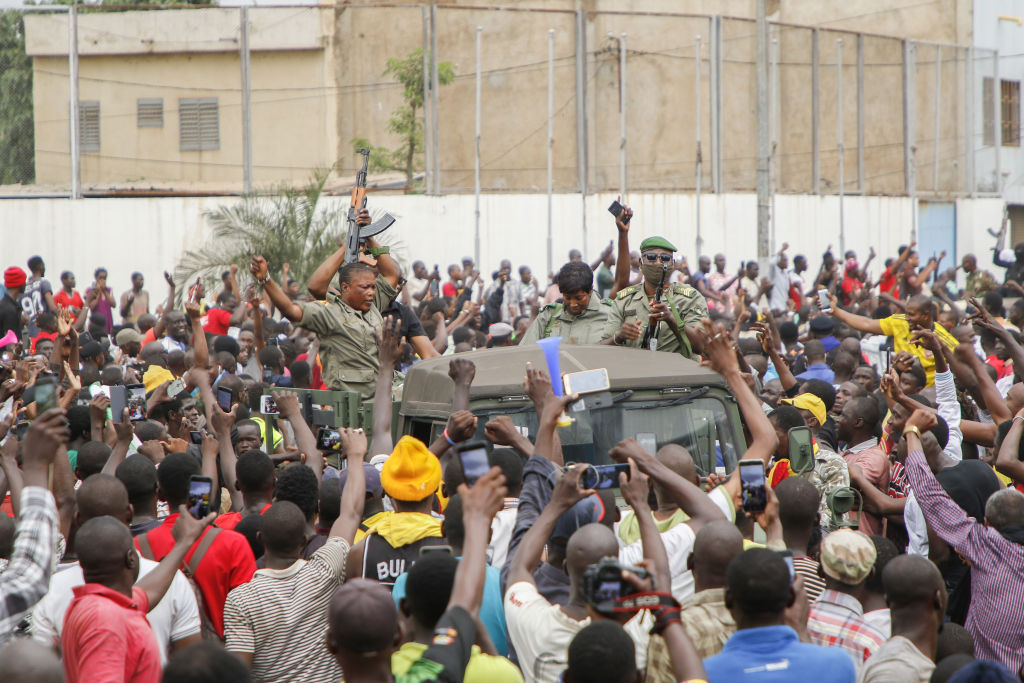
Crowds cheer as soldiers parade in vehicles along the Boulevard de l’Indépendance on August 18, 2020 in Bamako, Mali. John Kalapo / Getty
The elderly man, dressed in a white robe (boubou) and a prayer cap, sits on the kind of overstuffed leather chair that suggests luxury or power. Eyes partly hidden by his dark-framed spectacles, his voice is only slightly muffled by the surgical mask that obscures his features. His speech is clearer than it usually is.
Mali’s president, Ibrahim Boubacar Keïta (IBK), reelected two years ago, is resigning. “Do I really have a choice?” he asks the camera, or the soldiers around him. Another clip, not broadcast, shows IBK in the same chair, without a mask, eyes brimming and lips quivering.
Last week’s coup d’état in Mali might have been the most foreseeable coup in years, but it’s still amazing what a few men with assault rifles and SUVs can accomplish in West African politics. Tens of thousands of Malians had been in the streets of the capital, Bamako, on and off since Ramadan ended in May, to little avail.