The Fight for Labor Justice in College Sports Is About More Than Wages
A new California law will allow college athletes the right to profit off of their name and likeness. It’s a welcome step toward compensating such athletes for their labor. But the rot at the heart of the NCAA goes much deeper than wages.
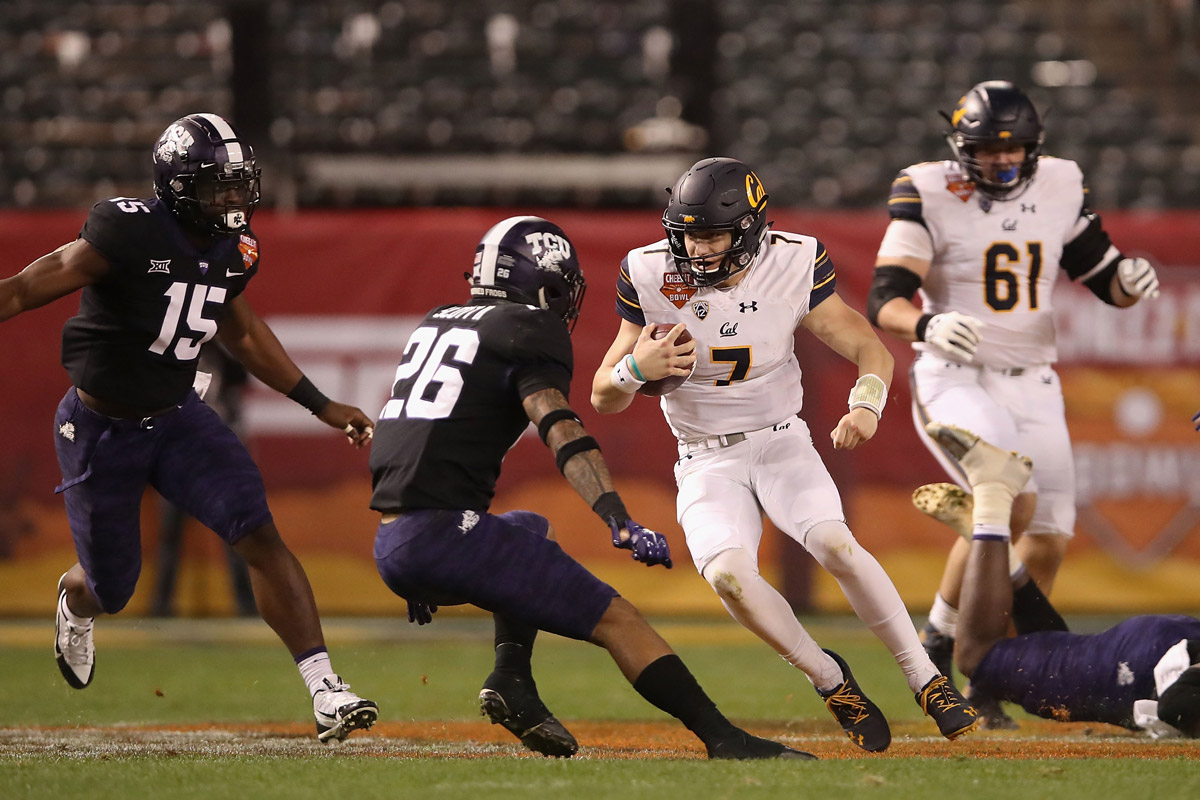
Quarterback Chase Garbers of the California Golden Bears scrambles with the football against safety Vernon Scott of the TCU Horned Frogs at Chase Field on December 26, 2018 in Phoenix, Arizona. (Christian Petersen / Getty Images)
Across the country, critics of NCAA exploitation are celebrating the fact that California governor Gavin Newsom just signed the state’s Fair Pay to Play Act into law, affording athletes at the state’s universities the right to profit off of their names, images, and likenesses beginning in 2023. The Golden State seems to have opened the floodgates, and afraid to be left behind, other states are lining up their own legislative iterations. Indeed, there now appears to be even federal legislation on the docket.
I stand solidly behind the principle that players deserve compensation. But I’m skeptical that this change, even if more broadly implemented across the country, really addresses the rot at the core of NCAA sport. To understand that rot, we need to look beyond compensation questions alone to how the NCAA articulates its mission and another, less remarked upon, recent event: a late Saturday night post-football-game press conference.
In its promotional materials, the NCAA makes it clear that the project of college sports is fundamentally pedagogical: the organization is “dedicated to the well-being and lifelong success of college athletes.” Indeed, it goes so far as to claim that “the association’s belief in student-athletes as students first is a foundational principle.”