The Pandemic Is Exposing the Cruelty of America’s Workhouse Economy
American workers are sharing their stories of life on unemployment benefits. The horrors of our collective surrender to the market are on full display.
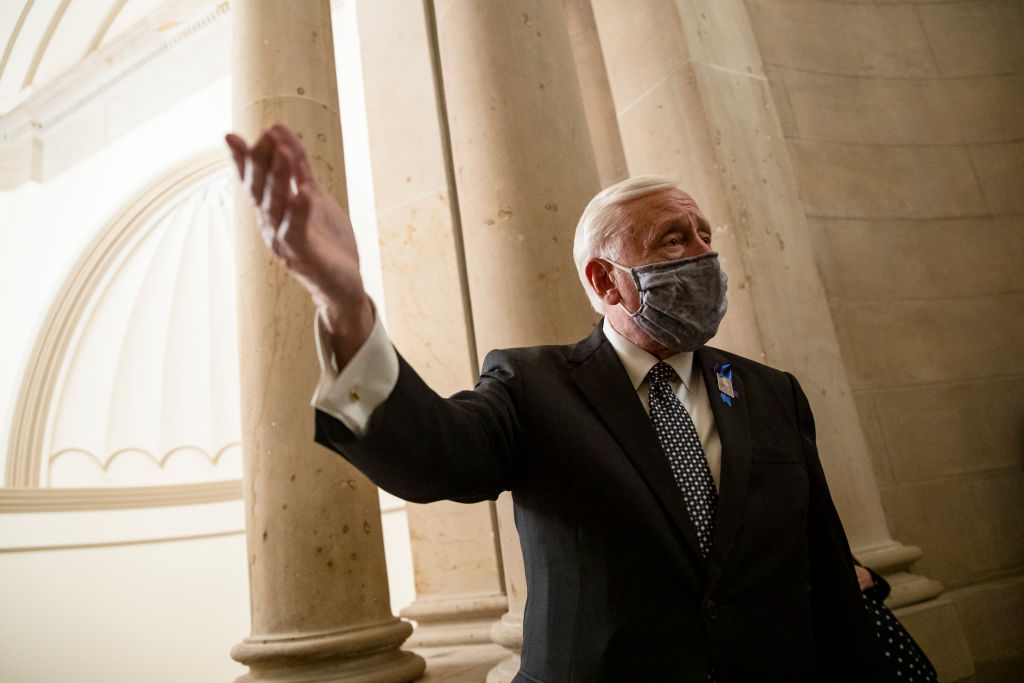
House majority leader Steny Hoyer stops to talk to reporters as he leaves the office of Speaker Nancy Pelosi on the eve of the expiration of the CARES Act on July 30, 2020 in Washington, DC. (Samuel Corum / Getty Images)
Congress has now resoundingly failed to reach an agreement to extend COVID-19–related relief and benefits for millions of Americans facing the cruelest economic calamity since the Great Depression. Even if lawmakers do forge some kind of arrangement in the coming days, the sluggishness of America’s withered state bureaucracies will ensure that whatever benefits do arrive will probably be too little — and will certainly be too late. The $600 a week unemployment checks that have supported so many workers during the pandemic expired just over a week ago and there is, as of yet, no clear timeline for when they might be restored, if indeed they’re restored at all.
Republicans, in true neo-Dickensian form, want the already meager benefits slashed by more than 60 percent. Ahead of the negotiations House majority leader Steny Hoyer seemed to have already capitulated in spirit, signaling that the Democrats were more than willing to budge on the extension of weekly unemployment benefits. Rounding off this tour de force of liberal fecklessness, Hoyer even offered a perfunctory nod to the popular right-wing idea that further benefits could serve as a disincentive to work — pointing to a report from the Congressional Budget Office which found that five out of six recipients of expanded unemployment would receive more money from the program than they would at their jobs.
It’s all pretty contemptible, if unsurprising. Since the 1990s at least, leaders in both parties have basically agreed that the purpose of most government benefits is to get workers back into the daily toil of call centers and bargain-basement retail jobs as quickly and efficiently as possible. During the early weeks of the pandemic, it briefly seemed like elements of the political class might actually be forced to rise to the occasion, if only thanks to the magnitude of the crisis. Any hope on that score has long since melted away as millions of desperate and struggling Americans watch their would-be tribunes calmly negotiate over the precise terms of their misery.