Unemployed Workers Can Fight Back
In the Depression-era United Kingdom, the National Unemployed Workers' Movement mobilized thousands to resist the indignities of unemployment. We're entering another period of massive economic crisis — and just like workers then, unemployed workers today can fight back.
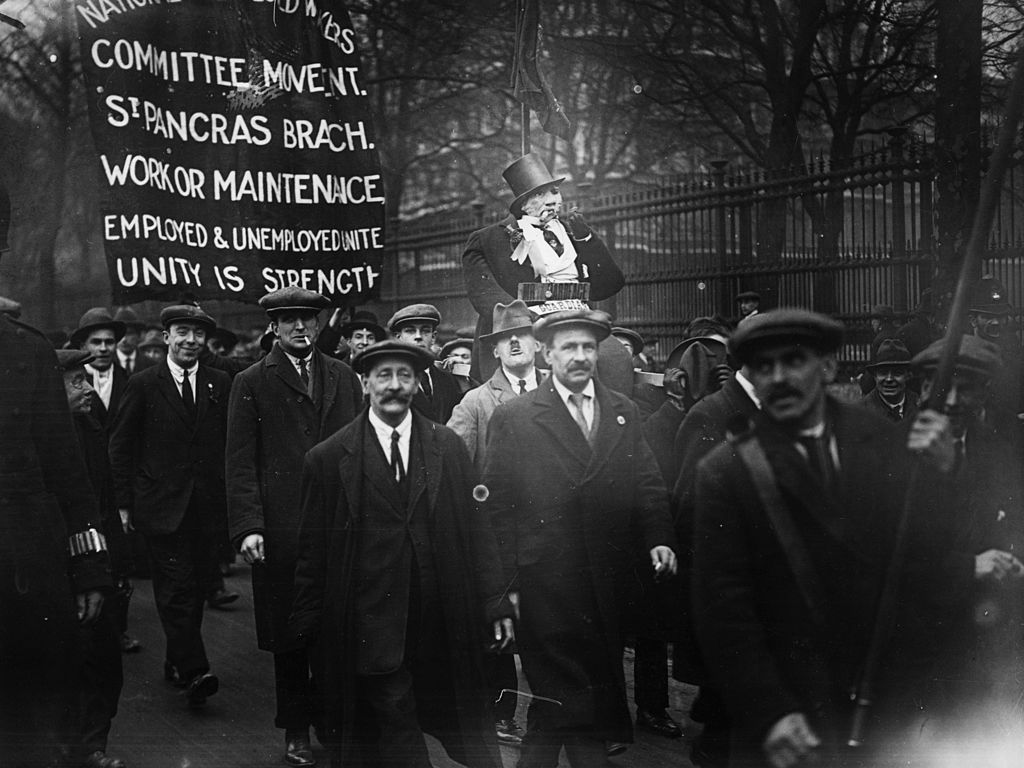
The St Pancras branch of the National Unemployed Workers’ Committee Movement stage a demonstration to demand “work or maintenance” in March 1925. (Topical Press Agency / Getty Images)
In her welcoming speech to the 1922 Trades Union Congress in Southport, the town’s mayor Christiana Hartley took the opportunity to express the ignorance of her class. In her speech, Mayor Hartley — an heiress to the Hartley’s jam fortune — derided the growing sense of injustice felt by millions, asking delegates:
Why all this unrest? What ails the workers? It seems that, in the rebound from the anxieties of the war, we are all trying to get something for nothing. Too much selfishness exists; that is the result of all the evil. We must not ask for the impossible.
Hartley’s remarks were rebutted by miners’ leader Bob Smillie and future Labour leader George Lansbury, who chastised her arrogance. To the millions directly affected by the war, it was clear that the Liberal–Conservative coalition government had no intention of producing a society fit for heroes, and the Armistice had brought only new anxieties. Thousands of soldiers were demobilized onto the dole queue, while scores of workers employed in the war industries also found themselves on the scrap heap. By the end of 1920, around 6 percent of the population was unemployed.