Amadeo Bordiga Was the Last Communist to Challenge Stalin to His Face
Founder of the Communist Party of Italy in 1921, Amadeo Bordiga is little known today, even among scholars of that country’s Marxist traditions. Fifty years after his death, the first English-language collection of his writings shows why Bordiga shouldn’t be overlooked.
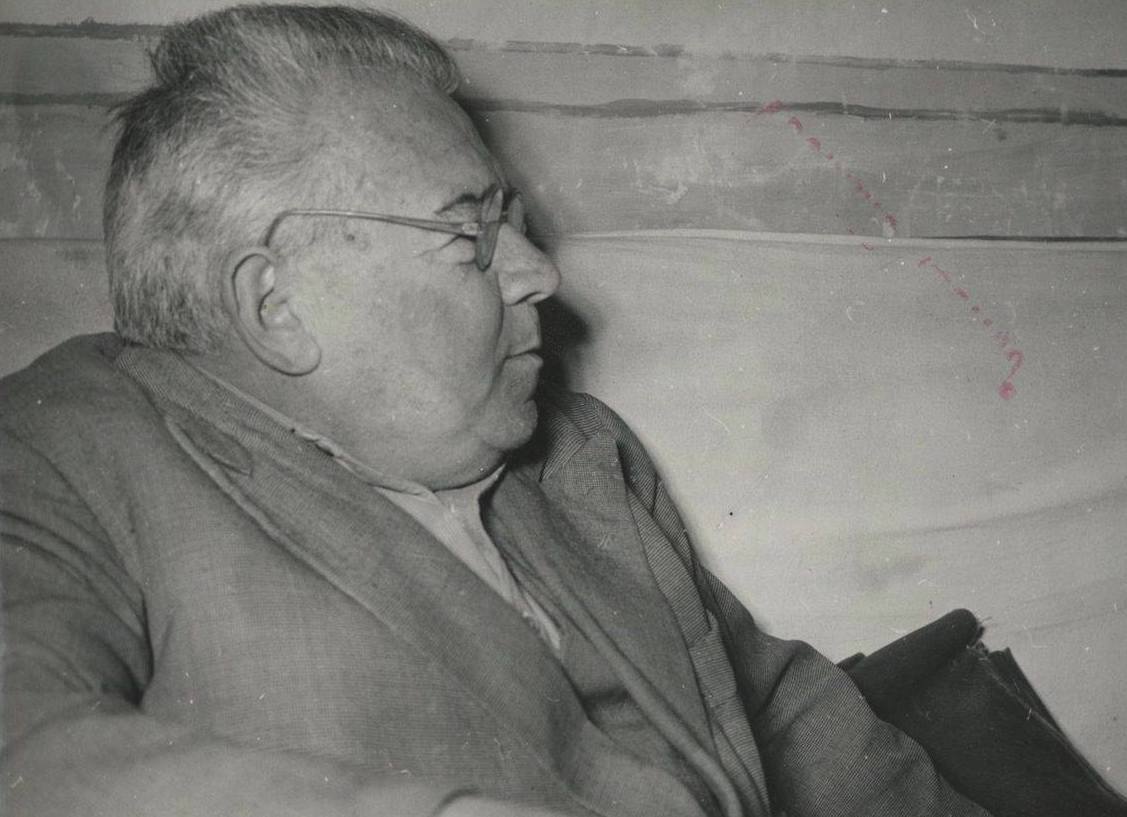
Amadeo Bordiga.
Even after the demise of the Italian Communist Party (PCI) in 1991, Antonio Gramsci’s influence has spread far beyond the ranks of the Left. But if Gramsci is better known for his reflection on culture and hegemony than for his direct Party involvement, there is an even greater veil of ignorance over his comrade Amadeo Bordiga. The party’s founder in 1921, Bordiga was expelled in 1930, to then be silenced and defamed by a party increasingly in the grip of Stalinism.
This — accompanied with Bordiga’s retreat from political activity under Fascism — have condemned his record to near-total oblivion. Even among his small band of comrades, Bordiga resisted any “celebrity,” in postwar decades publishing his political writings anonymously. Yet while he proudly asserted his own “inflexibility” — claiming only to restore the insights of Karl Marx, in the face of various falsifiers — Bordiga was himself a highly original thinker.
Fifty years since his death, Brill’s Historical Materialism series has published a selected works of Bordiga, covering his career from 1912 to 1965. The fine translation by Giacomo Donis and Patrick Camiller is the first such volume in English. Jacobin’s David Broder spoke to its editor Pietro Basso about the burying of Bordiga’s name, his ecological vision of communism, and how he challenged Joseph Stalin to his face.