Rest in Power, John Lewis
With the death of John Lewis, we’ve lost another giant of the Civil Rights Movement. It’s up to us to carry on the struggle for the “beautiful community” he spent his whole life fighting for.
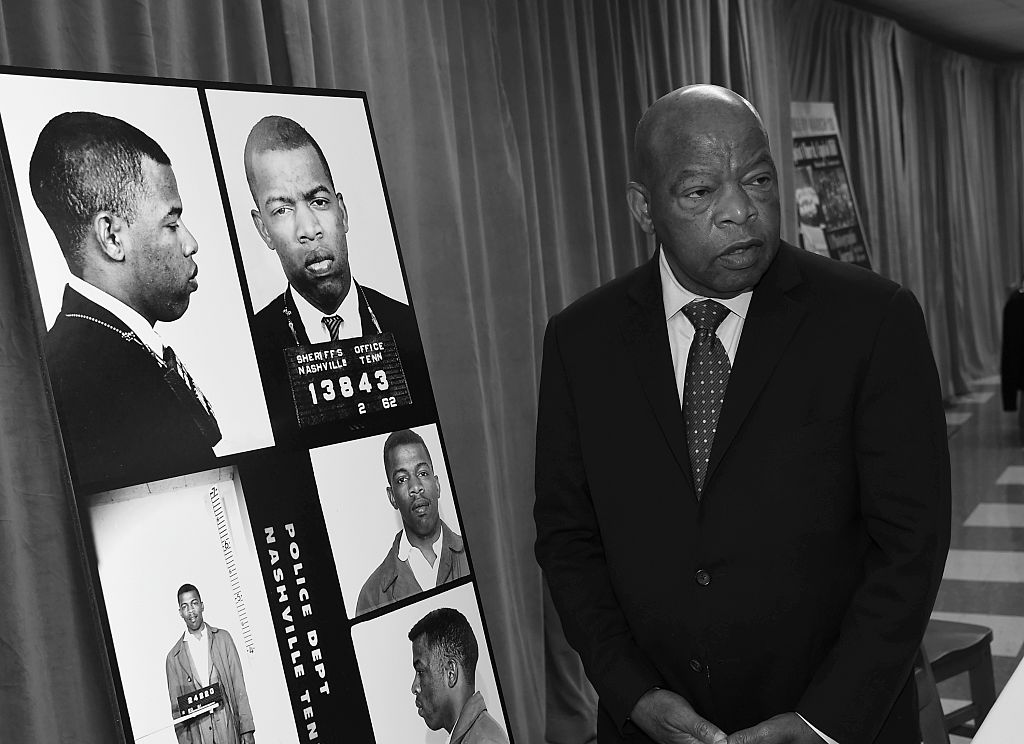
Civil Rights icon Congressman John Lewis views for the first time images and the record from his arrest for leading a nonviolent sit-in at Nashville’s segreated lunch counters on March 5, 1963. (Rick Diamond / Getty Images)
The passing of John Lewis has left a void in the soul of black America — and American society. For generations, Lewis has served as an icon of human rights and simple dignity. Without his grace and goodwill, the nation is worse off.
There is an odd symmetry in Lewis’s death. Yesterday, we also learned of the passing of another civil rights veteran, C. T. Vivian. That both deaths come in a year of resurgence for the Black Lives Matter movement and increased talk of a “Third Reconstruction” only means we must find a deeper reservoir for understanding the trials and travails of the Second Reconstruction — the Civil Rights Movement. Born in 1940, Lewis was part of the radical younger generation of activists who launched the great sit-ins and Freedom Rides, exemplifying the early optimism — and determination — of the period.
Lewis came from a humble background. His parents were sharecroppers in Alabama, and he never lost the keen awareness of the degradations of being poor and black in the Deep South. Lewis was denied access to his local library as a young boy, an incident that still stung him many years later — he was brought to tears thinking about it in 2016 during the award ceremony for the graphic novel series March based on his life.