The Intellectual Dark Web’s “Maverick Free Thinkers” Are Just Defenders of the Status Quo
The “intellectual dark web” made up of thinkers like Jordan Peterson and Sam Harris likes to pose as a bastion of serious intellectual inquiry and open debate. But its animating spirit is deeply conservative: a determination to “prove” that our societies' hierarchies of wealth and power are natural and inevitable.
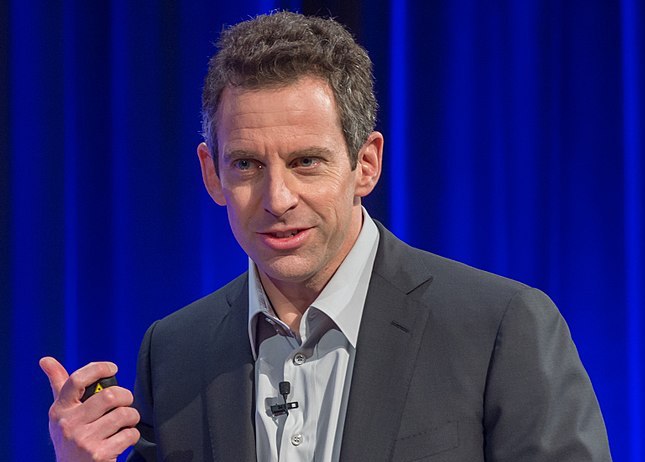
Sam Harris in San Francisco, 2014.
In a now infamous 2018 profile in the New York Times penned by Bari Weiss, the world was first introduced to the so-called “Intellectual Dark Web” (IDW): a group of would-be mavericks who were said to be waging a righteous crusade against the rising tides of political correctness and intellectual conformity. There was, of course, an obvious irony to the piece’s central conceit: its supposedly renegade protagonists claiming to be victims of a stifling cultural climate while enjoying tremendous influence and receiving a glowing profile in a global newspaper of record.
As Michael Brooks observes in the opening chapter of his new book Against the Web, the contradiction is hardly a new one. Reactionary figures, after all, have projected a narrative of cultural victimhood going back to the earliest days of William F. Buckley Jr and the National Review.
Complaints about a stifling and censorious climate of political correctness are also far from a novel development. Nonetheless, as Brooks argues, the so-called IDW still represents something more than just garden-variety cultural conservatism even if the two share plenty of terrain.