Black Lives Matter Should Inspire a Challenge to Caste and Religious Oppression in India
Solidarity from India with anti-racist protesters in the United States is hollow if the same critical scrutiny isn't applied to oppression and police brutality in India itself.
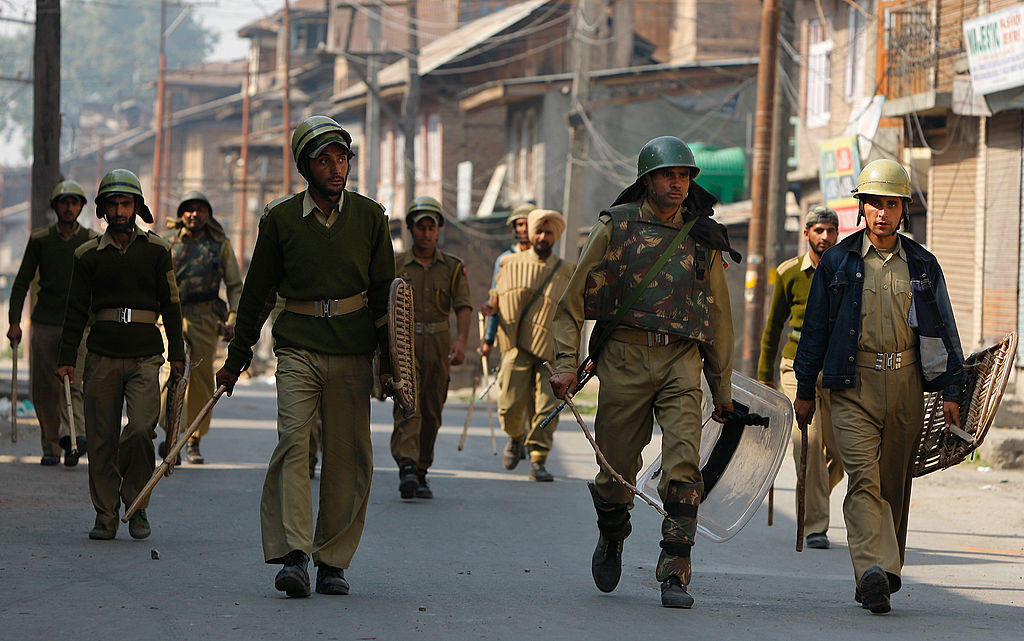
Indian military patrol the streets in Srinagar, Kashmir, India, 2008. (Paula Bronstein / Getty Images)
When the anti-racist protests erupted in the United States, social media in India was filled with expressions of solidarity for Black Lives Matter. But there has been hardly any self-critical scrutiny of racism or the abuses of the police in India itself. Although police brutality and impunity are familiar concepts in India, the country’s middle class has rarely made noise about it.
Racism against black people is present in Indian society: in 2014, a mob tried to lynch three African students in a crowded Delhi Metro station, and Indian politicians have made statements branding Africans as drug dealers and sex workers. There has also been a long history of harassment and discrimination against Indians who are considered racially different from dominant communities.
On the North Indian Plain, people casually refer to those with darker skin — particularly from the country’s southern regions — as “madrasi” or “kala/kali.” Yet South Indians can also engage in the same kind of behavior against people from the northeast, calling them Chinese, Nepali, “chinki,” etc. Many studies have documented the discrimination against those from the northeastern regions and Muslims in housing and employment.