Higher Education Privatization Opened Up International Students to Trump’s Attack
Trump’s decision to rescind his directive targeting international students is an enormous win. But he wouldn’t have been able to use students as political pawns if states hadn’t imposed austerity and privatization on universities in the first place.
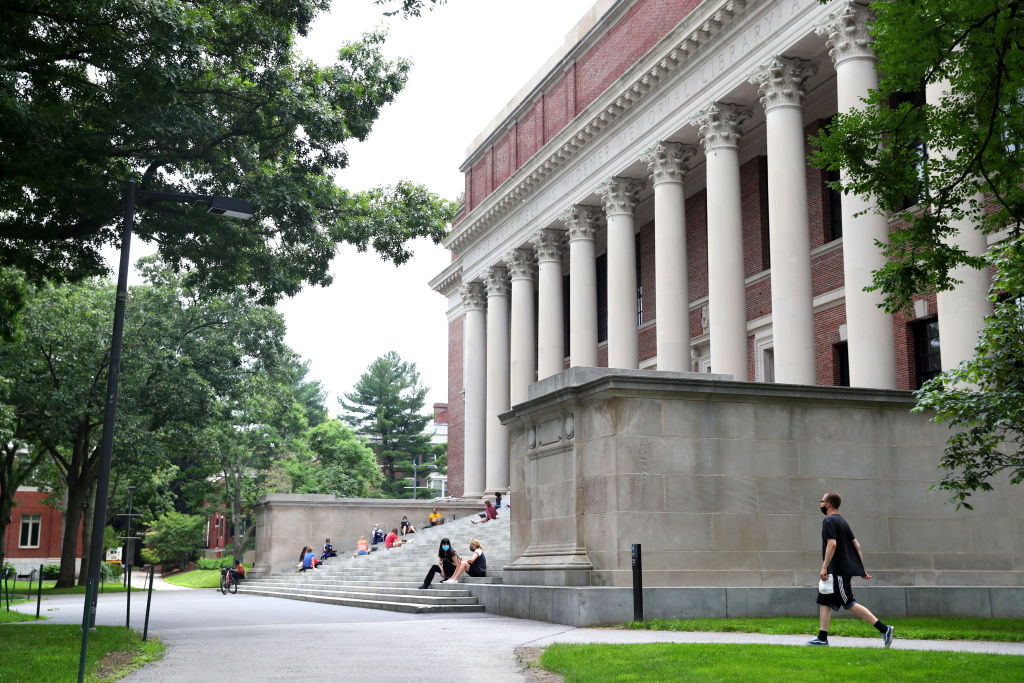
Harvard and Massachusetts Institute of Technology have sued the Trump administration for its decision to strip international college students of their visas if all of their courses are held online. (Maddie Meyer / Getty Images)
Last week, the Trump administration issued an ICE directive stating that international students in the United States on the most common visas would be deported if their colleges remained online because of the COVID-19 pandemic. Yesterday, ICE rescinded the new rules as abruptly as they had been issued. Lawsuits and briefs filed by scores of colleges and state attorneys general, coupled with a groundswell of popular opposition, forced Trump to back down for now.
Yet Trump’s vindictive order — which combined crude nativism, pandemic denialism, and resentful anti-intellectualism into one swift action — still proved a powerful point. For a moment, schools were forced to choose between risking the lives of their students, faculties, and communities, and losing their international students. These students, Trump proved beyond a doubt, could be used as political pawns. And the schools chock full of “liberal elites” who criticize him would feel the heat in the process.
Despite Trump’s decision to rescind the order — an enormous victory — it will not be the last anti-immigrant action. This is a White House pervaded by uncommon cruelty, and Trump is facing an uphill reelection bid. But let’s take a step back: how did international students end up as bargaining chips in the first place, not just as individuals but as money-makers vital to the survival of American universities?