In the 1970s, a Soft Coup Removed Australia’s Left-Wing Prime Minister
The 1975 “dismissal” of Gough Whitlam by the Queen’s representative, Sir John Kerr, is one of the defining moments in Australia’s modern history. It also forms part of a Cold War history that saw left-wing governments around the globe punished for daring to break with US hegemony.
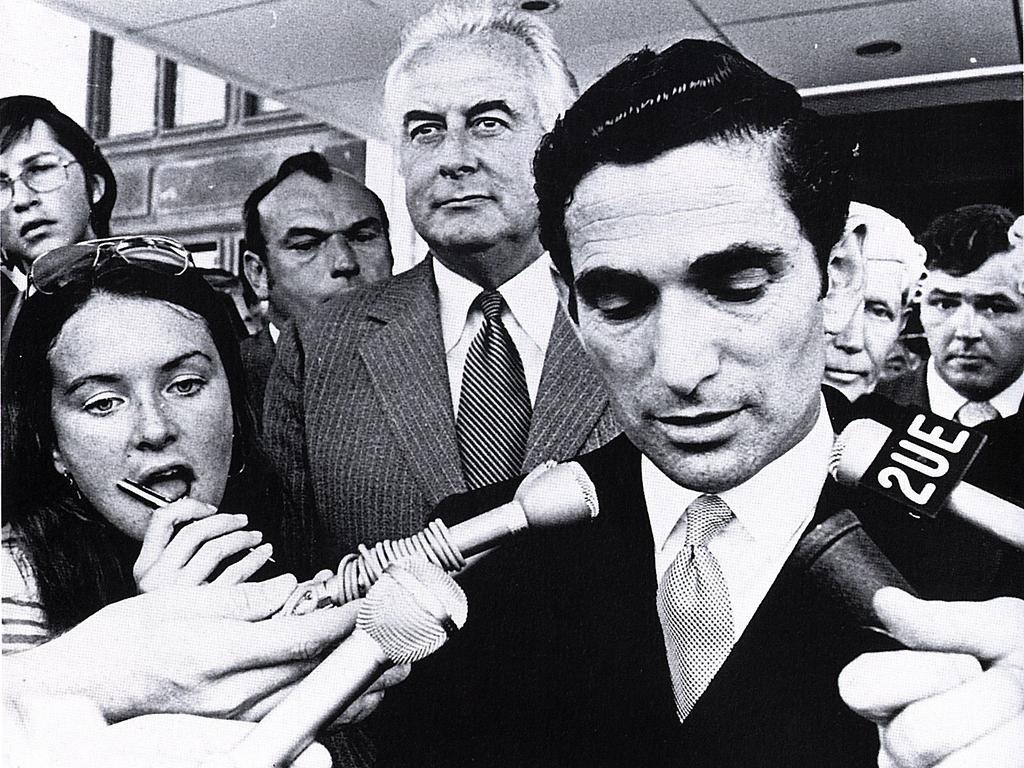
Gough Whitlam after his dismissal as prime minister of Australia. News Corp Australia
Forty-five years ago, on November 11, 1975, the Labor prime minister of Australia, Gough Whitlam, was removed from office by the governor-general, Sir John Kerr. With Whitlam gone, Kerr then “prorogued” — dissolved — parliament and appointed the conservative opposition leader, Malcolm Fraser, in his place. When new elections came around six weeks later, the caretaker Liberal government won in a landslide. The event, known as “the Dismissal” in Australia, was a soft coup.
A defining moment in Australia’s modern history, it is also part of Cold War history — the final event in a series of US interventions that began in earnest in 1953–4, with coups against the reformist Jacobo Árbenz government of Guatemala and the elected Mohammad Mosaddegh government of Iran. The bloodiness of such events varied with the terrain — from political mass murder in Indonesia in 1965 to genocide in Guatemala over decades — and the place of the Dismissal in this sequence is easy to miss because of its bloodlessness. But its significance cannot be overstated, for it is the moment in Cold War history when the US government schemed, prodded, and nudged its way to removing a mildly inconvenient government.
Dismissal Redux
Australians are talking about the Dismissal again, because the national archives have just released 1,200 pages of letters and documents exchanged between Sir John Kerr and Queen Elizabeth II, or, more accurately, her private secretary Sir Martin Charteris, between Kerr’s appointment in 1974 and his resignation in 1977. Both the British Crown and the National Archives have spent four years trying to block the release of these documents, and only a High (i.e., Supreme) Court decision on a case brought by the historian Jenny Hocking has made them available, as government documents. (It’s a case with vast ramifications for holdings in many Commonwealth countries.)