We’ve Always Had the Money for Medicare for All — We’ve Just Given It to Corporations Instead
Since 2008, the US has spent $20–35 trillion on corporate bailouts. It’s about the same “unaffordable” amount that Medicare for All has been projected to cost — used for lining corporate pockets instead of providing health care to people who need it.
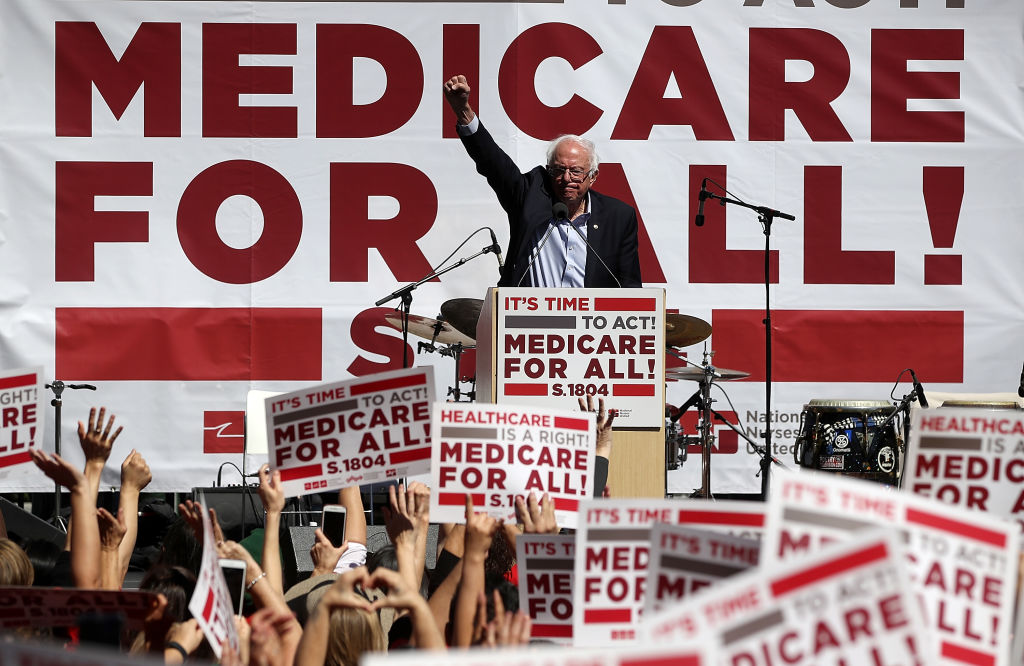
Senator Bernie Sanders speaks during a health care rally on September 22, 2017 in San Francisco, California. (Justin Sullivan / Getty Images)
In recent weeks, we’ve seen health care industry CEOs report paying themselves $2.4 billion as twenty-seven million people were thrown off their health care coverage. We’ve also seen Americans being charged anywhere from $400,000 to $1.1 million for COVID-19 treatment and facing $2,000 bills for coronavirus tests.
In response, polls show Americans remain deeply concerned about the current health care system, and support for Medicare for All has surged. And yet, despite data showing that a single-payer system would save big money, surveys still indicate some popular trepidation about the price tag of government-sponsored health care. That reflects, in part, a Democratic primary season that saw most candidates, the press corps, and the Washington political class try to pretend that the planet’s wealthiest nation cannot possibly afford the kind of Medicare for All system that other less wealthy nations have had for decades.
“No matter how you cut the numbers, there is absolutely no way to pay for Medicare for All without tax increases — or spending cuts — on the middle class,” one pro-austerity group told Politico in a story breathlessly touted by the health care industry’s dark money group.