Expect More Military “Liberal Interventionism” Under a Joe Biden Presidency
The liberal establishment is desperate to return a centrist to the White House in November and reestablish the country’s more stable military dominance of the world order, disrupted only briefly by Donald Trump. Joe Biden’s terrible track record on foreign policy — including his championing of war in Iraq — suggests a return to Obama-style strong military interventions abroad.
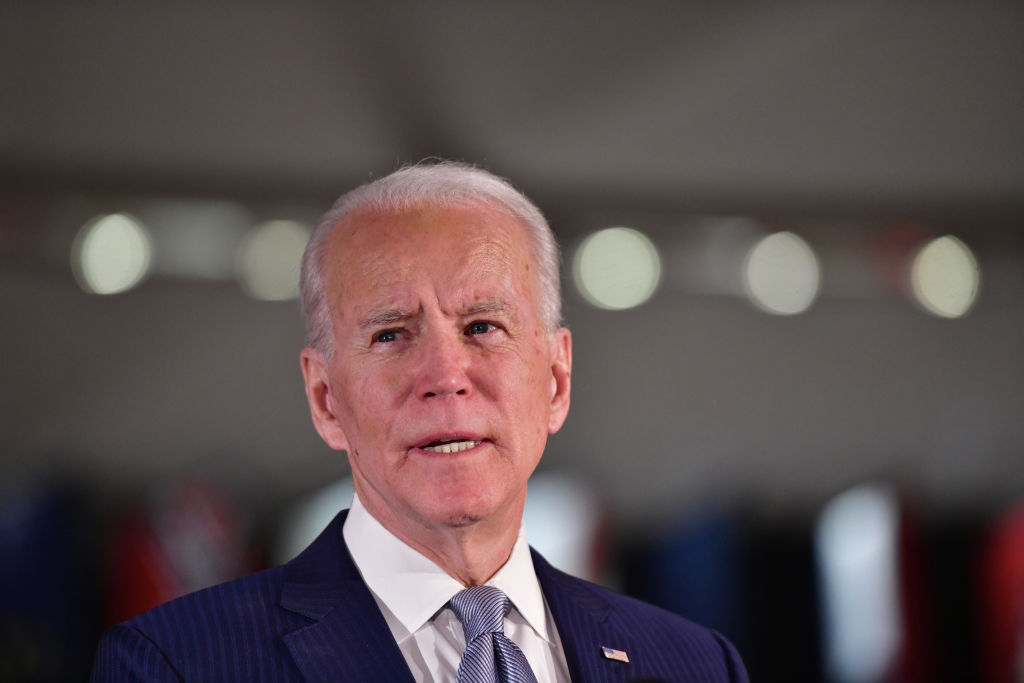
Democratic presidential candidate former vice president Joe Biden addresses the media and a small group of supporters during a primary night event on March 10, 2020 in Philadelphia, Pennsylvania. (Mark Makela / Getty Images)
To the consternation of many on the Left, Joe Biden formally secured the Democratic Party’s nomination yesterday. And if polling both nationally and in several key battleground states is accurate, he stands a reasonable chance of defeating Donald Trump to become the 46 president of the United States. As voters consider their options this fall, and as leftists prepare to navigate the next four years, it is reasonable to fast forward a bit to examine what a potential Biden administration might look like.
There is perhaps no more critical area in which to start strategizing for a future Biden administration than foreign policy. For one thing, the almost unchecked growth of the “imperial presidency” has left the executive branch unchallenged in its control over this arena. Even under Trump, a president whose foreign policy decisions routinely alarm his own political allies, congressional attempts to reclaim some role in foreign affairs have been feeble and easily defeated. If there is any part of a Biden agenda that is likely to be enacted, regardless of the makeup of Congress, it is this one.
For another thing, it is on the global front where the greatest challenges of the next presidency will lie. The COVID-19 pandemic has run rampant across Asia, Europe, and the Americas, and continues to pose a threat in places like sub-Saharan Africa and Southeast Asia. Moreover, as in past pandemics the threat of a second wave — perhaps even deadlier than the first — will continue to loom unless and until scientists develop a safe and effective treatment and/or vaccine. Perhaps more seriously, recovering from the economic damage the pandemic has wrought will likely take years, and in the meantime that devastation will undoubtedly contribute to escalating instability around the world. This crisis has exposed weaknesses in international institutions and the global economy that must be addressed, lest the world go through it all again the next time it’s confronted with a new and virulent pathogen.