A View of the Green New Deal From Argentina
- Sara Shields
The Green New Deal is gaining prominence internationally, with transformative green programs that respond to the specific needs of national economies. In debt-laden Argentina, leftists are arguing for a new Gran Pacto that implements a basic income and suspends all external-debt payments.
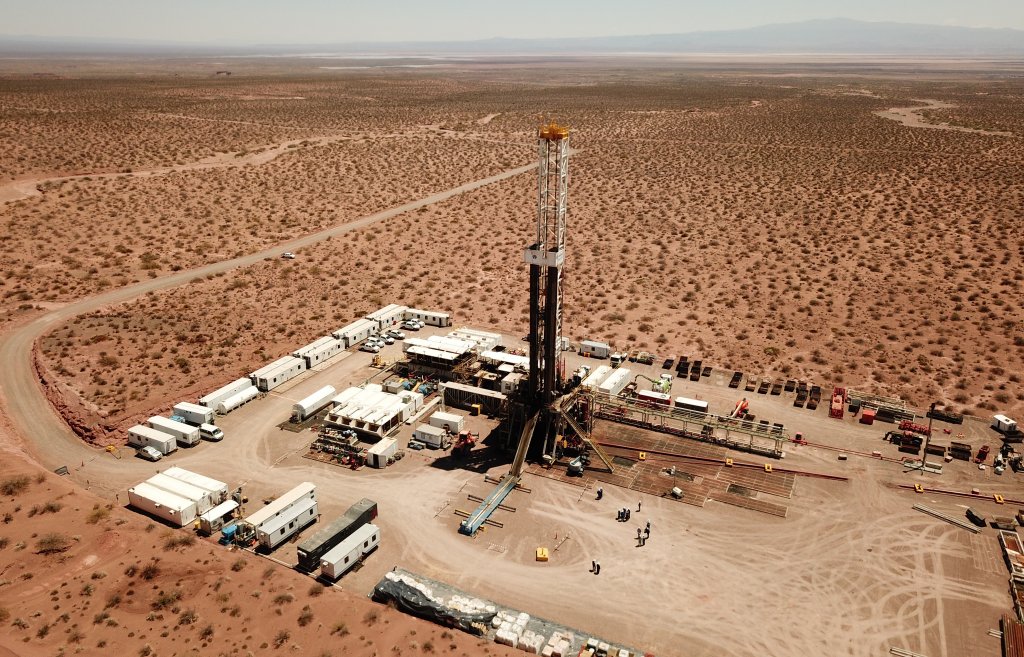
The Bandurria Sur production site in the Vaca Muerta. Photo: YPF
Civilization is at a crossroads. The pandemic has only deepened social and economic inequalities that were already intolerable. It is now necessary to look again at alternatives that only a few months ago seemed unviable in order to find a different way out of this crisis. As seldom before, the pandemic impels us to stop seeing the state, markets, family, and community in the usual distorted way. In light of our social vulnerability and our human condition as inter- and eco-dependent beings, we must think again about a comprehensive reconfiguration of society, health, the economy, and the environment, in a way that pays tribute to life and people.
This means that the capacities of the state, now revealed to be essential to overcome the crisis at global and national level, must be placed at the service of a major Green New Deal or Grand Ecosocial and Economic Pact (Gran Pacto Ecosocial y Economico, or Gran Pacto) to transform the economy by means of a holistic plan that will save the planet and seek to achieve a fairer and more equal society. The worst-case scenario is that states around the world, in their drive to return to economic growth, will legislate against the environment — bailing out fossil-fuel companies and further accelerating the environmental crisis — as well as increasing inequality between rich and poor, the global North and the global South. We must understand, once and for all, that environmental justice and social justice go together. One is no use without the other.
In our view, the Gran Pacto should have five fundamental components: a universal citizen’s income, a progressive tax reform, the suspension of external debt payments, a national system of care, and a serious and radical proposal for the socioecological transition.