Argentina’s COVID–19 Lessons
The United States’ COVID-19 response has paled in many respects to Argentina’s. But it’s not just Argentina’s public health response that the United States should learn from — it’s also the country’s history of popular resistance that will be crucial to fighting unequal and undemocratic responses to the pandemic.
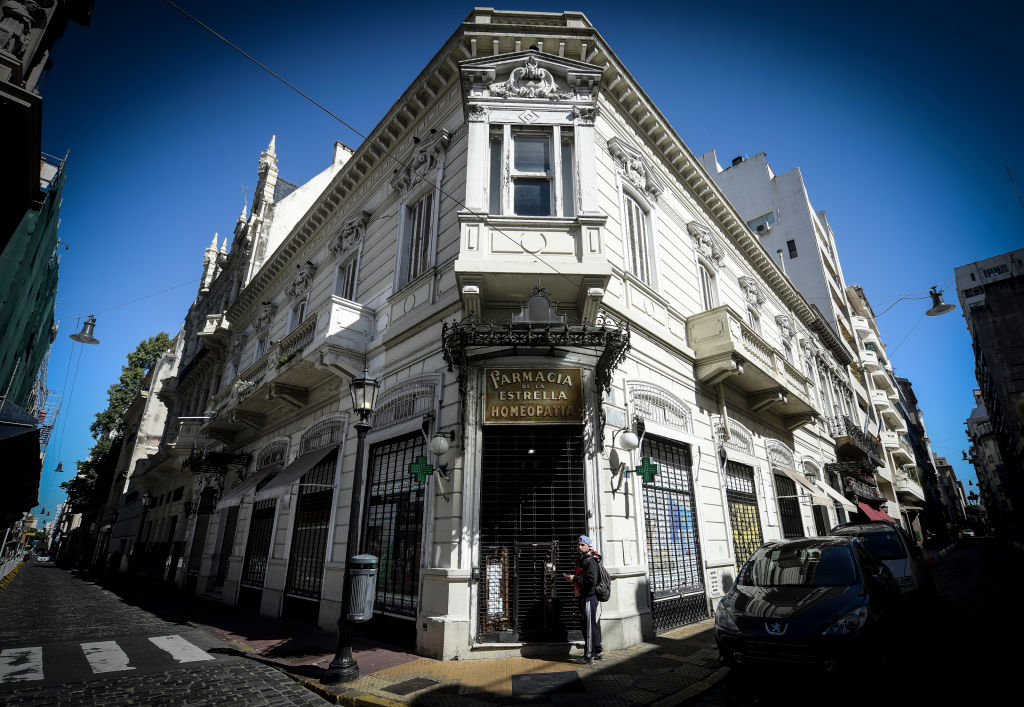
A client waits outside “Farmacia de la Estrella” on April 8, 2020 in Buenos Aires, Argentina.Marcelo Endelli / Getty
In the United States, mainstream coverage of COVID-19 outbreaks in the rest of the Americas has been characterized by some jealousy of Canada’s measures or horror at Brazil, whose president is perhaps the only major world leader handling it worse than Trump. Argentina, however, has gotten relatively little attention, though their example contrasts sharply to that of the United States: faster, more unified, and harsher.
Argentina’s measures are strict, justified to some extent but also bringing back memories of repression and dictatorship, with police patrolling public space, arresting quarantine violators, and putting them in mortal danger. But their history of popular organization and resilience in the face of crisis is an example to learn from. Demanding that the economy work for everyone, that the government recognize its crimes and negligence, and that basic rights be respected even in times of crisis are lessons the United States must carry forward.
Argentina’s Response
Argentina’s recent history has been turbulent. Since the 1950s, the country has seen several military governments. The most recent ruled the country from 1976 to 1983 and was responsible for the deaths of as many as 30,000, tortured and killed in secret prisons. When democracy returned in the 1980s, it came with one neoliberal economic shock after another, leaving the country with a history of sudden, massive inflation, debt crisis, and dozens of deals with the International Monetary Fund (IMF).