Brazilian Democracy Is at a Stalemate
- Nicolas Allen
With Jair Bolsonaro at the helm, Brazil’s democracy is in crisis. Veteran of the Brazilian left and the armed struggle against the dictatorship, and a principal strategist of the Workers’ Party, José “Zé” Dirceu spoke to Jacobin about the need for a broad front coalition to defeat Bolsonarismo.
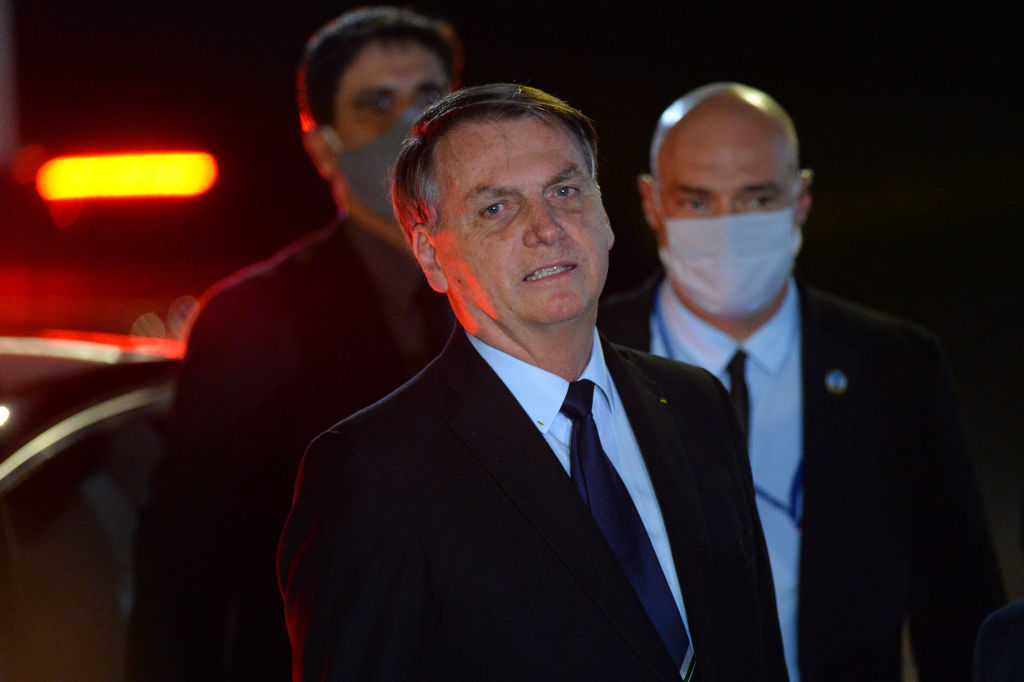
Brazilian president Jair Bolsonaro during a press conference at the Palácio da Alvorada on June 5, 2020 in Brasília, Brazil. (Andressa Anholete / Getty Images)
José “Zé” Dirceu de Oliveira e Silva, born in Passa Quatro in the state of Minas Gerais, has been one of the leading political figures in Brazilian history for at least four decades. A left-wing revolutionary and student leader in his youth, he fled to Cuba under the dictatorship, later returning to form the Workers’ Party (PT) and eventually served as chief of staff under Luiz Inácio Lula da Silva. Dirceu remains a polarizing figure in Brazilian politics — friends and foes alike know him as the “Iron Man.”
At an early age, Dirceu joined the Brazilian Communist Party (PCB). Inspired by the Cuban Revolution and the Vietnamese anti-imperialist struggle, he soon found himself in the dissident wing of the party calling for more direct confrontation with the military dictatorship. It was there he met communist dissidents like legendary guerilla fighter Carlos Marighella and Olavo de Carvalho, today known as the ideologue behind Jair Bolsonaro’s rise to power.
Throughout the early 1970s, Dirceu sought to organize the armed resistance to the dictatorship, undertaking military training in Cuba. After being pushed back into exile after repression against dissidents intensified, he returned to Brazil in 1975 and underwent plastic surgery to assume a new identity. He lived underground until 1979, and joined the founding line of the PT, along with trade unionists, intellectuals, activists, social movements, and left-wing ecclesiastical groups associated with liberation theology.