We Set Amazon on Fire
Millions of people stuck at home means more orders for Amazon. But squeezed Amazon employees in France and Italy didn’t want to be “essential workers” — and they launched a wave of strikes to demand a shutdown.
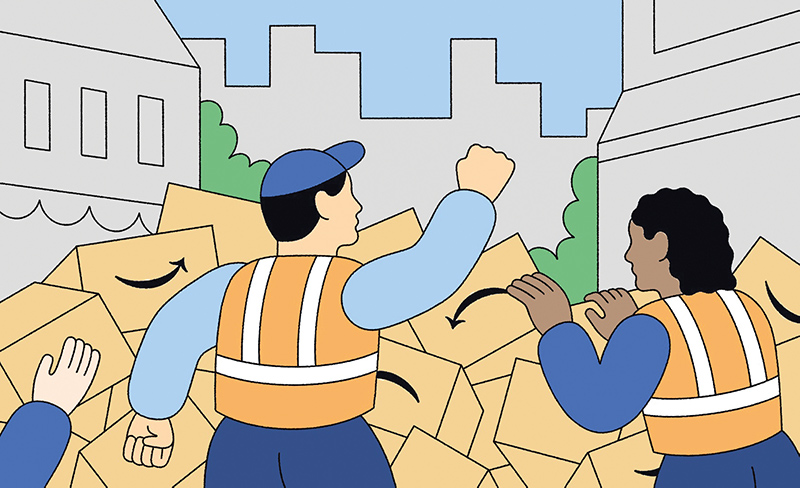
Illustration by Dominic Kesterton
By April, Italy was responsible for around a quarter of coronavirus deaths worldwide. Starting from a few towns in the hardest-hit zone rosse, a lockdown spread nationwide in early March and promised to keep Italians at home. Yet while “smart working” measures allowed a minority of mostly professional employees to work remotely, the situation for most workers was quite different.
Millions of workers had to continue showing up for their shifts — and even a government decree curtailing “unnecessary” economic activity left around a third of workplaces open. From the smallest shops to vast distribution centers, workers faced pressure to keep up production even in the absence of basic health and safety protections. But at Amazon, as elsewhere, they refused to be mere cannon fodder — and ignited a resurgence of labor conflict.
Soaring Sales
Such disputes partly owed to the lack of definition in what counted as “necessary” production. Throughout March, the employers’ federation Confindustria lobbied hard to keep workplaces open, insisting that a country long hit by stagnation couldn’t withstand a fresh recession. On March 22, faced with a wave of strikes from docks to engineering factories, the government passed a new decree promising a wider shutdown. Yet thanks to continued employer resistance, even in early April, some 11 million nonessential workers remained at work.