In Spain, Remote Learning Is Leaving Working-Class Kids Behind
Spain’s comprehensive schools are often considered a social leveler, offering free education and hot meals to kids from all backgrounds. But amid the coronavirus shutdown, the classroom has moved into the family home — and working-class parents have the least time and resources to devote to their children’s education.
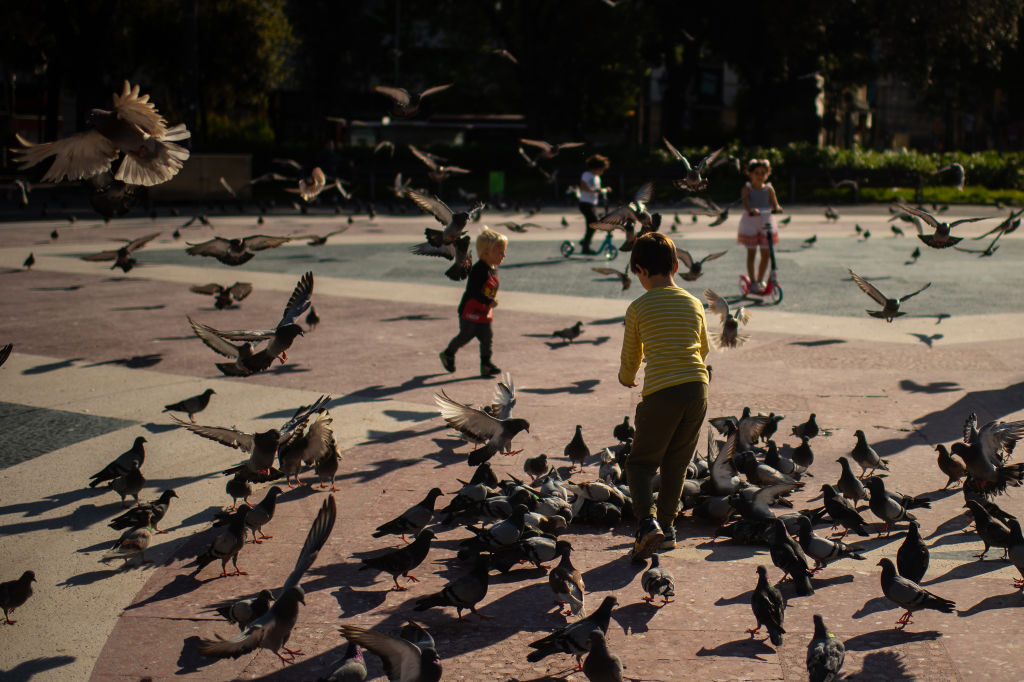
Children feed pigeons at Plaça de Catalunya on April 29, 2020 in Barcelona, Spain. (David Ramos / Getty Images)
At the outset of the COVID-19 outbreak, we were told the virus wouldn’t discriminate. Indeed, in Spain we saw several high-profile names test positive for the virus, from Begoña Gómez — the wife of Prime Minister Pedro Sánchez — to professional footballers. But it quickly became clear that those at the lower rungs of the social ladder would be hit hardest by the pandemic.
With little to zero job security, many have been forced to spend hours in public transport to get to work or drive across cities delivering our Amazon and UPS orders. In Spain, as elsewhere, workers are forgoing their own welfare in order to feed their own families. El País recently published a photograph of plantation workers in Murcia, in the southeast of the country, clustered together without any sort of face protection as they collected the latest harvest.
But this inequality has not been felt by adults alone: for it has quickly filtered down to Spain’s children. In a country which prides itself on free and comprehensive education for all children from age six and sixteen, the closure of schools across Spain has seen children from lower-income families fall behind at an alarming rate.