Chile’s Six Months of Struggle
- Daniel Runnels
The feminist movement in Chile is one of the strongest in the world, last month bringing millions of women into the streets for International Women’s Day. Building on the mass protests that erupted in October, their movement is only growing bolder, and articulating meaningful alternatives to the country’s neoliberal order.
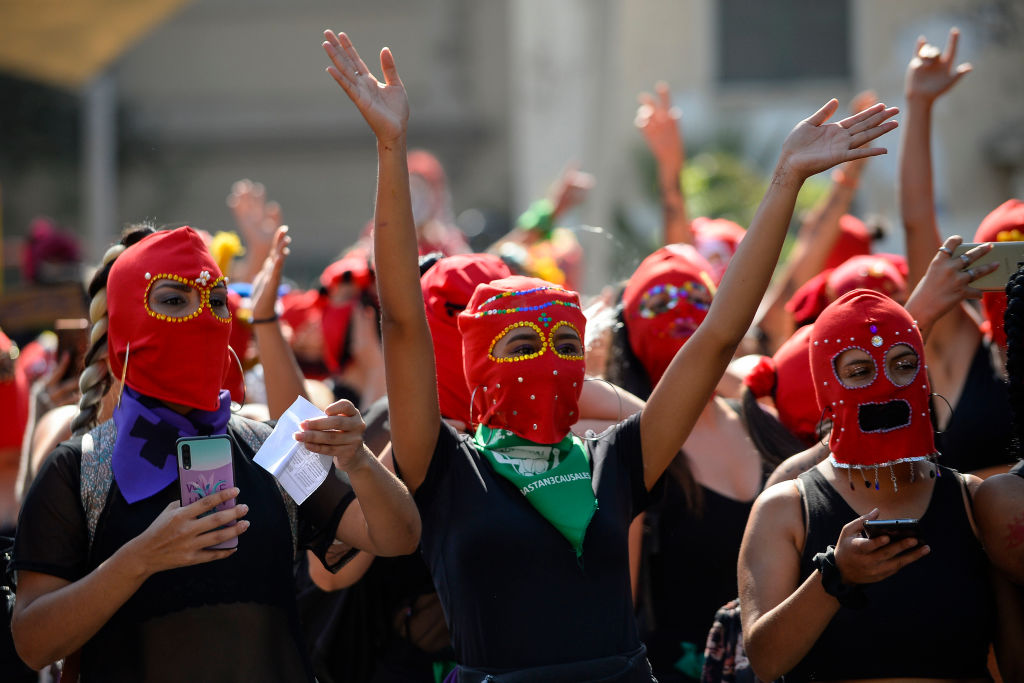
Women with masks shout slogans during protests as part of International Women’s Day on March 8, 2020 in Santiago, Chile. Claudio Santana / Getty
The last six months in Chile have been momentous. In October of last year, the country experienced the largest popular uprisings in its recent history; now the threat of the COVID-19 pandemic is, as elsewhere, causing economic havoc and widespread fear. In addition to these two landmarks, and taking place in between them, March 8 in Chile saw huge demonstrations to mark International Women’s Day. In Santiago alone, 2 million women and their allies took to the streets, just days before the pandemic suddenly came to dominate the political agenda.
Despite the recommendations of health professionals — which are, for the most part, supported by the public — and the example of neighboring countries, Sebastián Piñera’s right-wing government is refusing to order a general lockdown to prevent the spread of the virus. The billionaire businessman has rejected all social protection measures, among them rent moratoria, the freezing of debt and mortgage payments, price controls, and the temporary nationalization of private hospitals. The government has not even made free testing available. In Chile, as in the United States, health care is a very lucrative business, and all the more so in an emergency.
The government has not missed the opportunity to take advantage of the situation, instituting a curfew that is advertised as preventing the spread of infections, but in reality only lends itself to further police powers. This is in a country that, since the uprising last October, has seen more than thirty deaths by law enforcement, over four hundred eye injuries, hundreds of complaints of torture and sexual abuse, and thousands of political prisoners that, to this day, in a full-blown health emergency, are still in jail.