Even in a Pandemic, Workers Can Fight Back
During the Great Depression, radicals played key roles in helping organize the worker upsurges that led to the New Deal’s pro-worker policies. We can do the same today in fighting back against the economic misery and unsafe working conditions of the coronavirus pandemic.
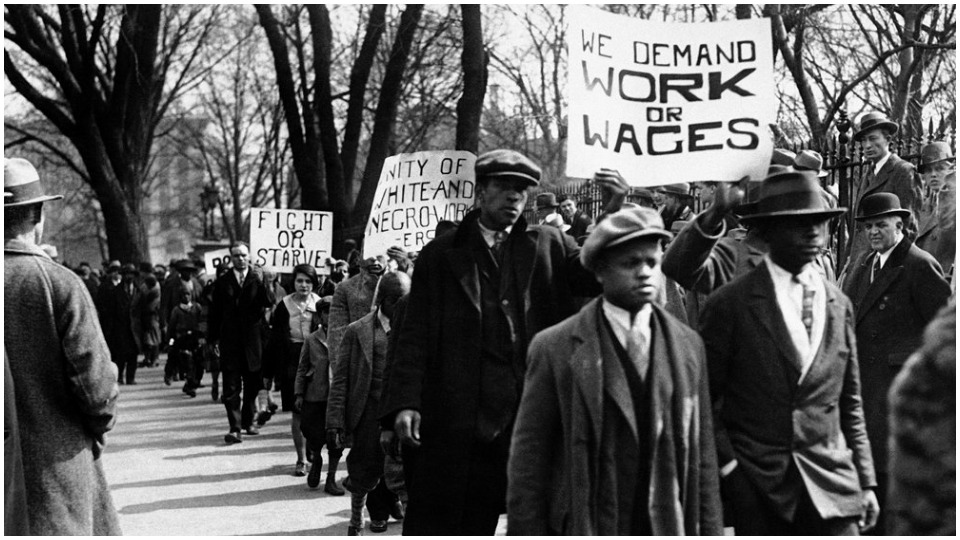
Demonstrators organized by the Unemployed Council gather in front of the White House before a major protest for International Unemployment Day, on March 6, 1930. (CPUSA Archives)
Unemployment in the United States has skyrocketed in the past month. Nearly ten million Americans filed for unemployment benefits between March 14 and March 28, as nonessential businesses have shut down indefinitely and other employers have cut hours and laid off workers in response to the coronavirus pandemic. The Federal Reserve Bank of St. Louis has predicted that the unemployment rate could reach 32 percent, surpassing joblessness at the height of the Great Depression.
Our institutions are not set up to address this crisis. Existing welfare and unemployment benefits are insufficient, and millions of people will lose their employer-provided health insurance. Without intense pressure from below to force a rapid change in government policy, the coronavirus-induced recession will mean misery for the vast majority of Americans.
Thankfully, the American left can look to a previous period of crisis, in which mass movements won far-reaching material gains for the working class at a time of widespread misery. Not long after the Great Depression began in 1929, a mass protest movement of the unemployed exploded. And after experiencing a decade of defeats in the 1920s, the labor movement roared back to life in the 1930s with mass strikes and on-the-job action, including general strikes in three major cities in 1934.