Sick Pay Should Be Enough to Live On
Faced with the threat of coronavirus, Boris Johnson has said statutory sick pay will apply from the first day off work. But the meager payment isn’t enough to live on — and won’t even be made to all workers.
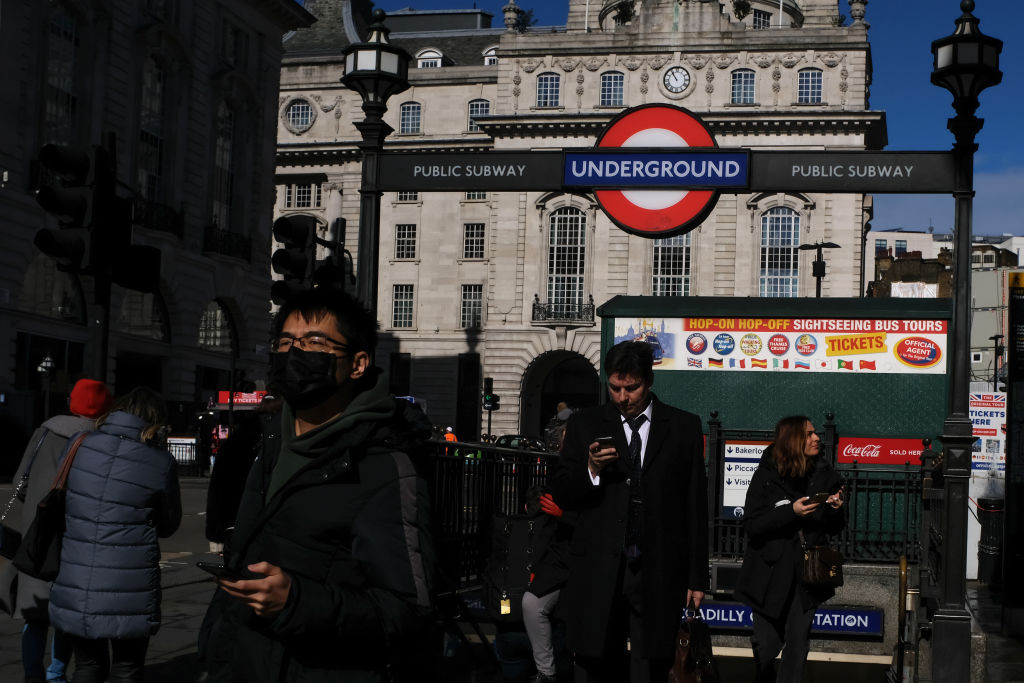
A man wears a face mask as he comes out of Piccadilly Circus Underground Station, London on March 12, 2020. Alberto Pezzali / NurPhoto via Getty
COVID-19 needs no introduction. Now labeled a pandemic, it is dominating news stories worldwide. Italy is in lockdown, France and Spain are rapidly heading in the same direction, the United States has banned travel from Europe, and UK supermarkets are experiencing a wave of hamsterkauf. One thing is clear — despite the government’s claims of a contain-and-delay action plan, coronavirus is spreading.
The outbreak has, in many ways, become reminiscent of wartime scenarios — with toilet paper rationing and restrictions on public events among the most prominent responses. But it has also revealed deep inadequacies in our employment law system, shining a new light on the stark inequalities between the rights of different groups within our workforce.
The issues impacting workers largely boil down to employment status. The definitions of employee, worker, and self-employed, along with their respective packages of rights (or lack thereof) have made headlines in recent years. High-profile business models like those employed by Uber and Deliveroo brought the distinction between self-employed and worker, and sick pay and holiday pay issues, into the public eye.