The UCSC Strike Is Working
Graduate student workers at the University of California Santa Cruz have been threatened with termination and even deportation for going on strike against an austerity-happy administration. But the punitive measures have only galvanized support for the striking workers.
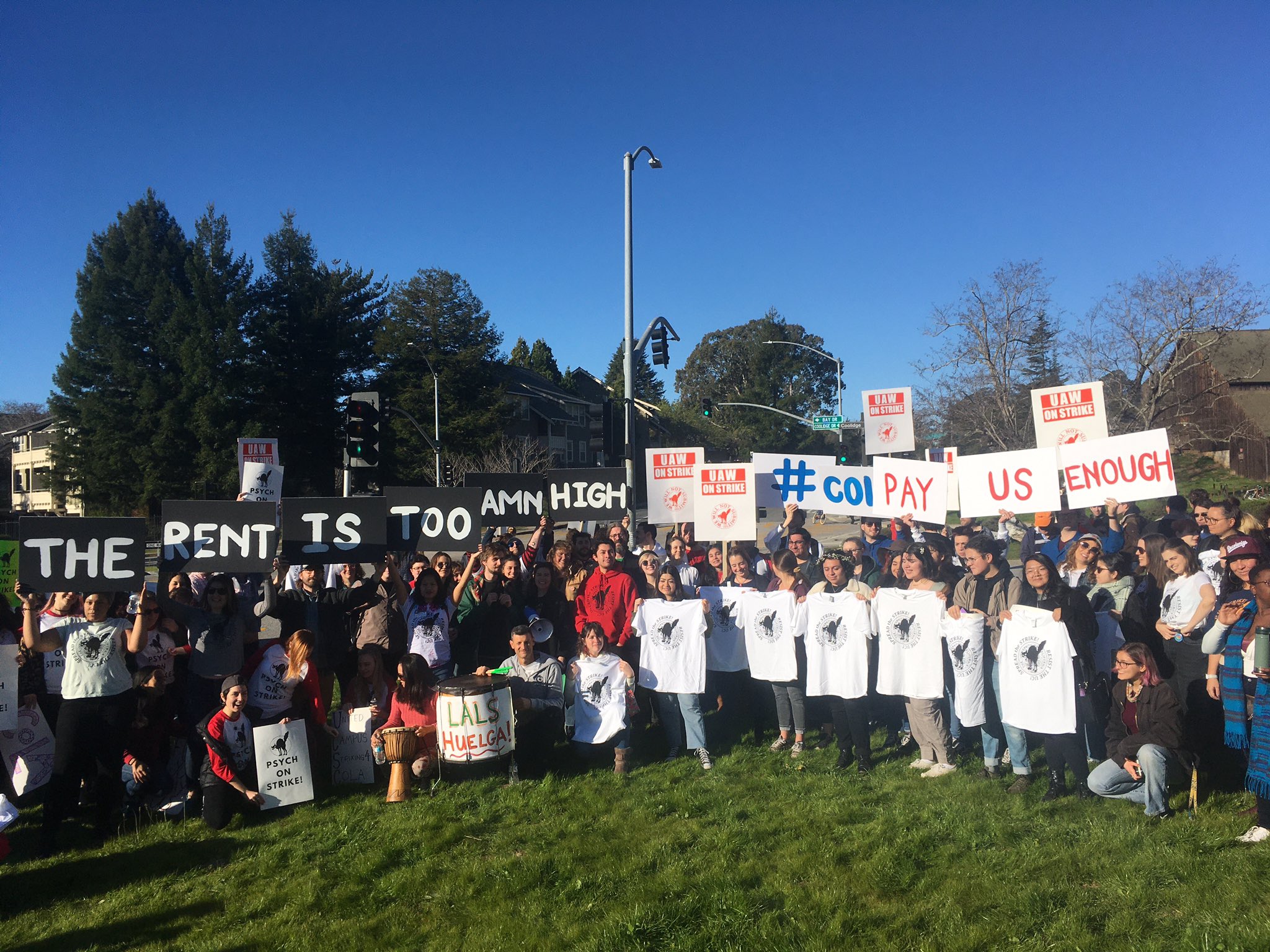
Striking workers at UC Santa Cruz, February 10, 2020.@payusmoreucsc / Twitter
Since organizing a wildcat grading strike in December, graduate student workers at the University of California Santa Cruz (UCSC) have countered the university administration’s intransigence and mounting threats by escalating their campaign for a cost-of-living adjustment (COLA) to keep their wages in line with inflation. Now, with at least eighty-five graduate workers still retaining grades withheld since fall quarter, they’ve launched a full-on teaching strike that has snowballed into a broader fight against university cutbacks.
The leap from a “digital picket” to a physical one, now in its third week, has enlarged the scope and efficacy of their campaign. Hundreds of undergraduates have joined the picket line, motivated by issues of debt and dwindling university resources; adjunct instructors have accelerated their fight for job security and fair wages; tenured faculty have begun to flex their organizational muscle to oppose retaliation and restructuring; and staff and workers have found creative ways to support a wave of protest that has pitted administrators against nearly every sector of the university. Solidarity statements have come in from the West Virginia teachers who went on strike in 2018 and Lect_s en Lutte, an association of precarious faculty in metropolitan Paris; donations have poured in from as far away as Palestine.
The administration has responded with retaliation and brute force to the wildcat strike (i.e., conducted without the sanctioning of the workers’ union, UAW-2865). Graduate workers and undergraduate students were met on the first day of picketing, February 10, with scores of strike-breaking police from other UC campuses near and far (which the university admits cost $300,000 per day). An undergraduate Food not Bombs volunteer delivering water to the picket line was arrested, and a phalanx of police, batons drawn, rushed a crowd that was demanding their release. At least one student was struck on the head in the encounter and was later diagnosed with a severe concussion.