Yes, We Need to Strike For Each Other
In 1980s Britain, miners went on strike in support of nurses’ pay claims, throwing their industrial muscle behind under-pressure hospital staff. After decades of harsh anti-union laws, Labour’s manifesto promises a way to rebuild this culture of solidarity.
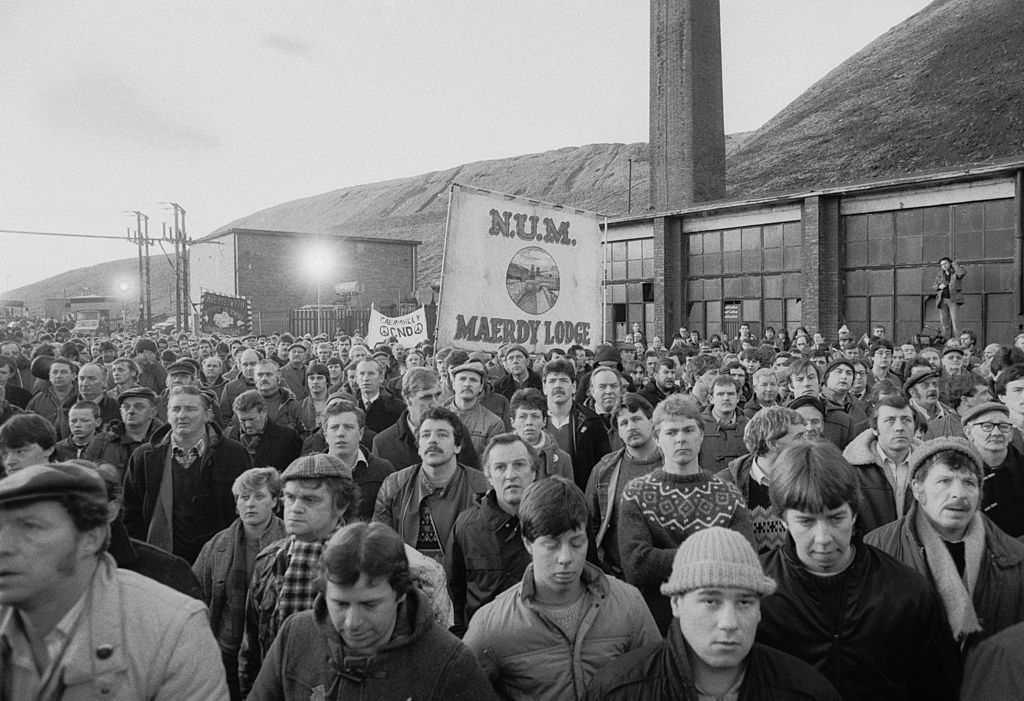
Miners at a demonstration at Maerdy Lodge Colliery in Gwent, South Wales at the end of the miners’ strike, March 5, 1985.Steve Eason / Hulton Archive / Getty
The headlines responding to Labour’s manifesto were predictably savage: the Daily Telegraph went with “Labour manifesto would allow mass strikes to paralyze the country,” while the Daily Mail proclaimed “John McDonnell tries to take Britain back to the strike-filled 1970s.” To many, this might seem like political ideology masquerading as news. But if unions are to regain their former power to discipline employers, perhaps these claims are not completely inaccurate.
Unlike Labour’s manifesto for the 2017 general election, this time around the party is promising to “remove unnecessary restrictions on industrial action” and “repeal anti-trade union legislation” — going beyond even the repeal of the Tories’ strike-busting Trade Union Act of 2016. After the Labour manifesto launch on November 21, Shadow Chancellor John McDonnell told BBC Radio 4’s premier morning news program that this meant the party would repeal the ban on lawful secondary strikes.
There are, nonetheless, limits to the plan: McDonnell he ruled out a repeal of the ban on lawful secondary picketing. Such a move would have restored workers’ right to picket workplaces other than their own — stopping workers, goods, or services moving in or out, and thus providing another means of striking at employers.