Medicare for All Is the One-in-a-Million Shot We Have to Make Happen
There’s nothing realistic about passing Medicare for All — we’re outgunned, outspent, and outmatched. And yet we have no other choice.
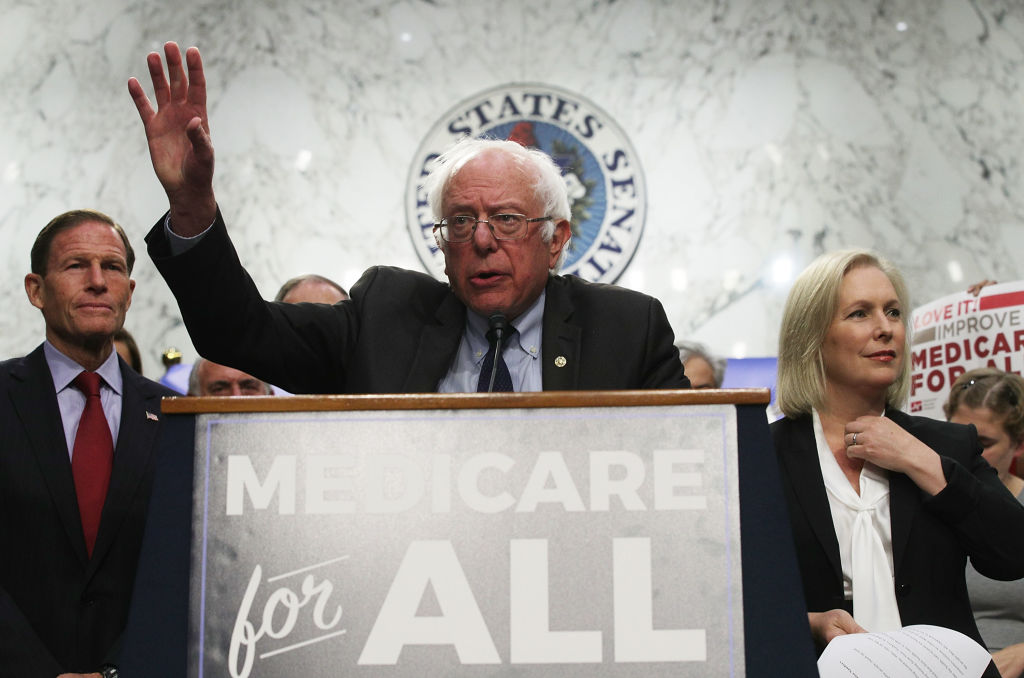
Senator Bernie Sanders speaks during an event on Capitol Hill last September introducing his Medicare for All Act of 2017. Alex Wong / Getty
Throughout 2019, Iowans were walloped with political commercial after political commercial, owing to the fluke that their state votes first in the presidential primaries. Remarkably, by late summer, a newly minted advocacy group called the Partnership for America’s Health Care Future (PAHCF) was churning out half of them. One spot features what’s understood to be a bona fide cross section of America — think a minivan mom, a blue-collar carpenter, and a corduroy-clad millennial — all leveling with viewers about why they find state-run health insurance simply intolerable: “The politicians may call it Medicare for All, Medicare buy-in, or the public option, but they mean the same thing. Higher taxes or premiums, lower quality care.”
The PAHCF alliance was formed in 2017, joining together major health care industry players including insurers, hospitals, pharmaceuticals, and medical device companies in an all-out propaganda war against Medicare for All. They’ve pooled a massive war chest, spending a million dollars on commercials in Cedar Rapids and Des Moines in one month alone. They’ve also commissioned studies warning of the apocalyptic dangers of health care reform, hosted lavish events to present their case to lawmakers, scooped up establishment-savvy staffers, and met privately with legislators — all with the goal of squashing not only Bernie Sanders’s Medicare for All proposal, but also the incrementalist public option presented by candidates as moderate as Joe Biden, Pete Buttigieg, and Amy Klobuchar.
But the $5 million they’ve reportedly raised already — even when placed alongside super PACs spreading similar messages — is chump change compared to what they’ll be willing to spend to preserve a system that’s been outrageously kind to them. The $3.5 trillion-dollar health care industry is a logic-defying colossus, and building an equitable universal system hinges on a confrontation with it — not only vanquishing the private insurance industry as it currently exists, but upending the entire business model of some of the most profitable firms on Earth.