The Problem With Keir Starmer
Keir Starmer is posing as the Labour Party's unity candidate, appearing prime ministerial while sticking by the party's left-wing policies. But if elected, he would be forced to choose between these priorities — and it's clear the left policies would lose out.
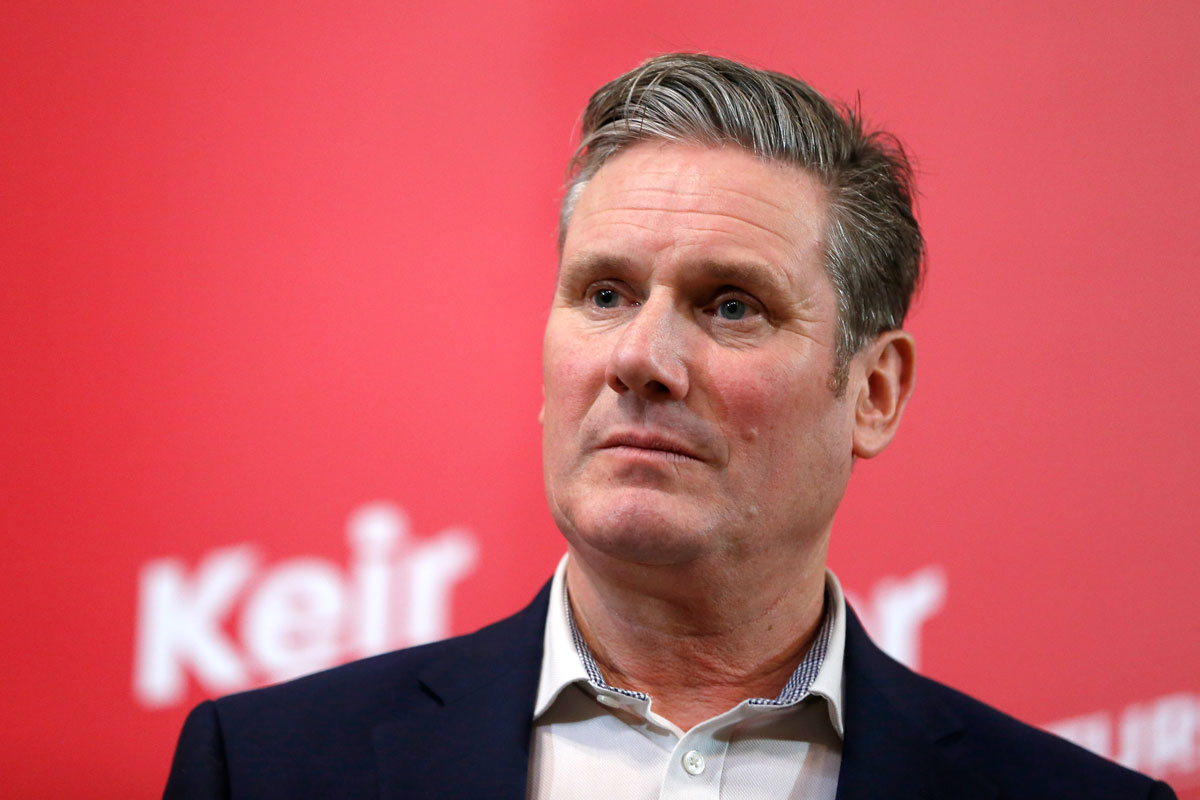
Keir Starmer at Westminster Cathedral Hall on January 31, 2020 in London, England. (Hollie Adams / Getty Images)
December’s general election was undeniably a hammer blow to Labour activists. It’s fair to say that most probably weren’t expecting to be beaten as badly as we were. Since the election of 2017 all the talk had been about what a socialist-led Labour government would do in office, and although a Commons majority always looked unlikely, many Labour members will have at least fancied their party’s chances of forcing a hung Parliament.
These heightened expectations make the scale of the defeat that materialized, and another five years of Tory government, all the more bruising. Now the Labour Party is facing up to the question of how to respond. Some aspiring leadership candidates have toured the TV studios volunteering to abandon high-profile policies from the 2019 manifesto — not because they’re unpopular, which they aren’t, but implicitly bargaining with the media and offering them the chance to set the boundaries of Labour policy in return for more favorable (or just less vituperative) coverage.
Regardless of this, support for existing Labour policy remains strong among the party’s rank and file, shortly to be voting for a new leader, and the prospect of any drastic retrenchment from the current manifesto is unlikely to be favorably received. Hence the different tack taken by Keir Starmer in his leadership campaign, positioning himself as the unity candidate working to bring Labour’s draining four-year civil war to an end and take the party back into government on a left-wing program at the next time of asking, presumably in 2024.