Canvassing for Bernie in Suburbia
Knocking on doors is a key part of a grassroots campaign, and can be extremely satisfying work for those involved. But as more gates and security systems transform the fabric of American cities, voters are increasingly out of reach.
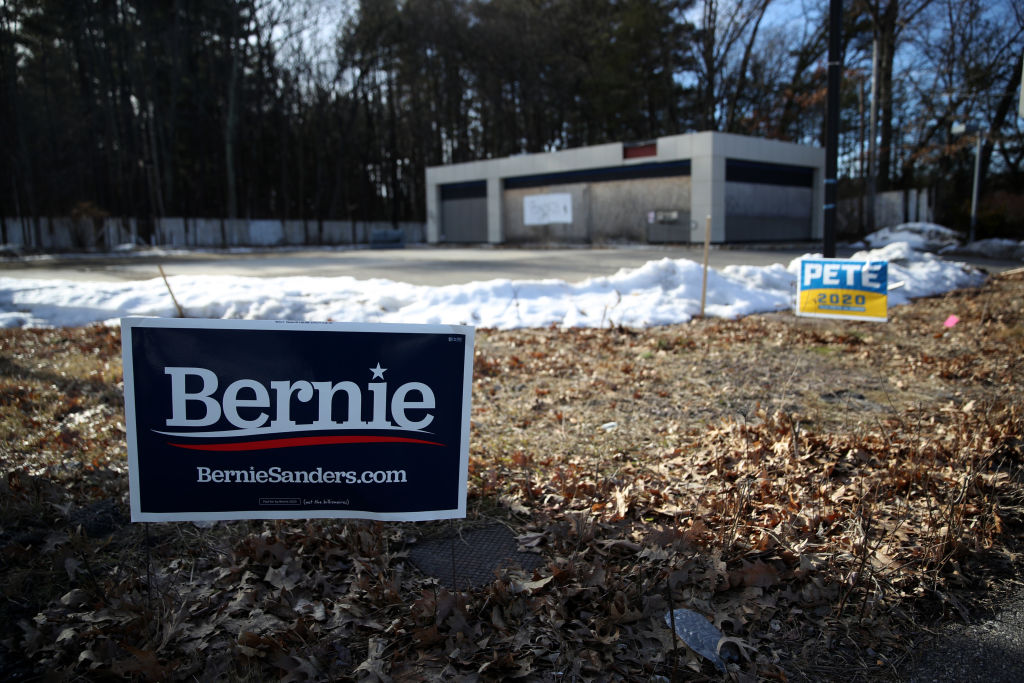
Yard signs for Democratic presidential candidates Sen. Bernie Sanders and former South Bend, Indiana mayor Pete Buttigieg are posted in front of an abandoned business on February 5, 2020 in Manchester, New Hampshire.Justin Sullivan / Getty
It is the day before the New Hampshire primary. A retired wedding photographer from Boston and I are canvassing for Bernie Sanders in a small rural town a short drive from Concord. It is not going well.
We have knocked on sixty-seven out of the sixty-eight doors on our allocated “turf” and thus far only five people have answered. One was a very elderly man with a jagged hole in his wooden front door who told us that he had never voted and never would. One was a man with no shirt and camo slacks who yelled abuse, sending me scuttling back to the car, thankful that he was speaking with his mouth, rather than a gun. One was a seventeen-year-old woman, too young to vote. One was a woman who had already voted via post for Pete Buttigieg. One was a Jehovah’s Witness, who told us his battle lay in a different kingdom.
It has taken us more than three hours to locate and knock on all these doors. The town was an unincorporated sprawl that hugs the side of a steep, wooded hill. McMansions with long, winding, unplowed driveways and icy stone steps are interspersed with bleak shacks ringed with rusty farm equipment. Over the last two days it has snowed, rained, and then snowed again and the ground is a patchwork of solid ice and muddy slush. Giant dogs hurl themselves at locked doors with sickening thuds. I diligently log each nonanswer using the canvassing app on my water-logged phone.