Organizing and Being Organized
The rise of a twenty-first-century socialist movement has raised the old question of what it means to be a “comrade.” By building comradeship, we forge a new kind of collective subject, different from friendship or being an “ally” — one that can change the world.
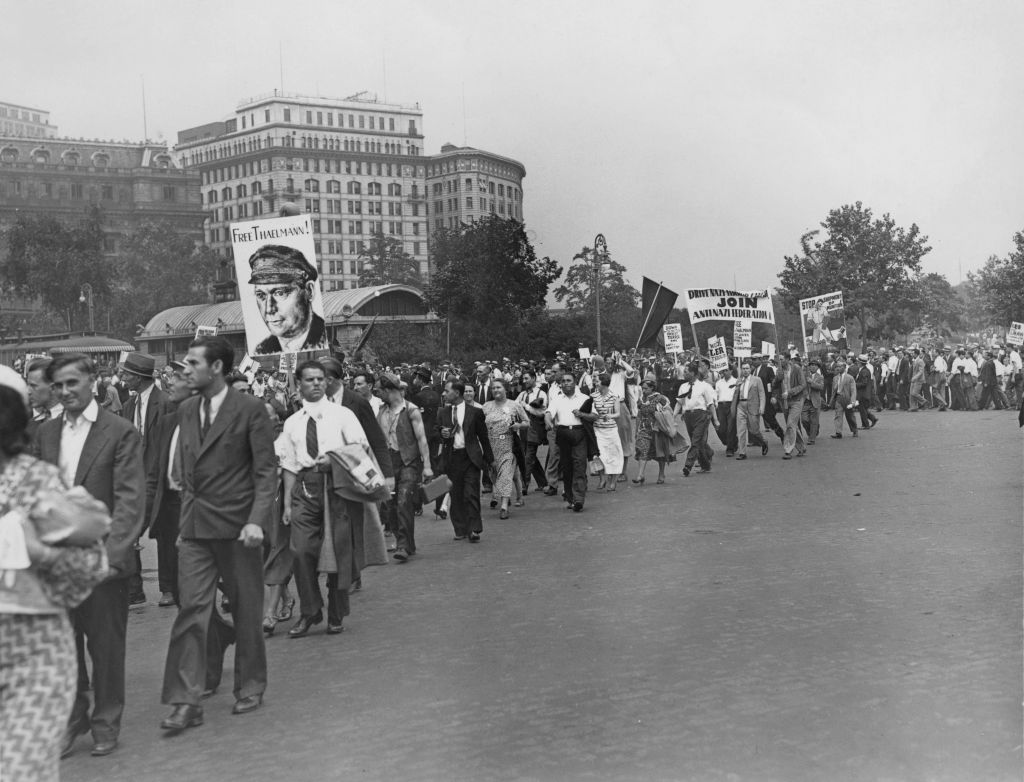
Anti-Nazi demonstrators march in Battery Park, New York, June 23, 1934.FPG / Archive Photos / Getty
Like a good organizer, Jodi Dean sometimes makes you a little uncomfortable. Reading Comrade: An Essay on Political Belonging is like sitting in the awkward silence of a one-on-one conversation, after the “ask” has been made. If you’re the organizer, you’re resisting the urge to add, “No pressure, obviously,” to the question you’ve just posed. If you’re being organized, you’re evaluating your possible outs against your commitments to building socialism or another campaign, your sense of duty, and your desire to please your organizer.
Part of what’s uncomfortable about this moment is that everyone knows that everyone knows what’s happening: we know an uncomfortable ask is coming. Yet we choose to participate in these dialogues, rather than just passing around a sign-up sheet, because we want to be made to do things that, deep down, we know we want to do, but probably won’t do without being asked.
Dean’s latest book captures this desire and the relationships it sustains. In Crowds and Party, Dean made a compelling case for rehabilitating the party as an organizational form for the Left. Comrade offers an extended meditation on the specific relation that characterizes party life: comradeship.