What the New Economic Policy Did — And What It Left Unfinished
The NEP helped the young Soviet Union rebound economically. But its lack of political reform hampered the ability of workers and peasants to resist the onset of Stalinism.
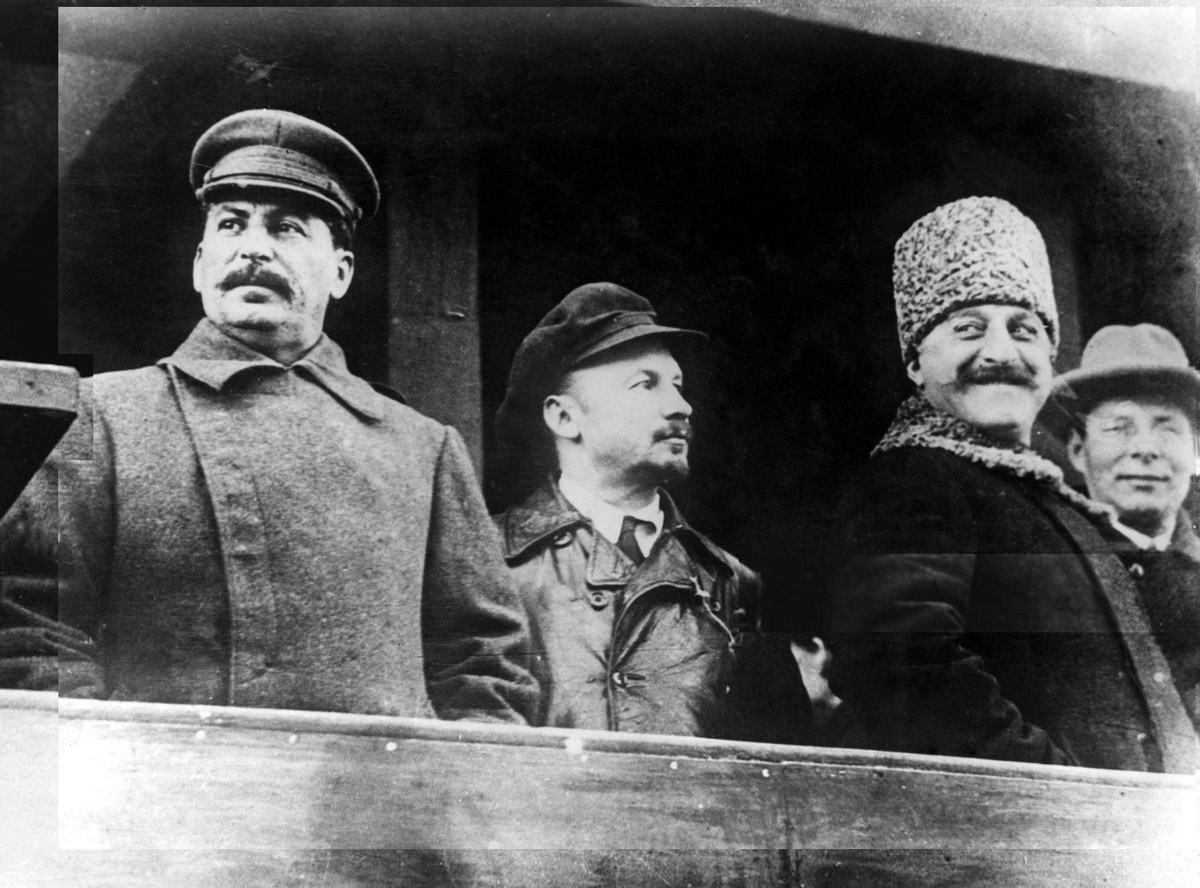
Joseph Stalin and Nikolai Bukharin on the tribune of the Vladimir Lenin Mausoleum during the celebration of the twelfth anniversary of the 1917 Russian Revolution, on November 7, 1929. (Wikimedia Commons)
In his review of my book Before Stalinism: The Rise and Fall of Soviet Democracy in Jacobin, John Marot not only disregards most of the material I cover in the book, but exclusively focuses on the issue of Lenin’s 1921 New Economic Policy (NEP).
Marot’s argument is that the NEP — a policy that provided economic freedom to peasants and small traders — was the alternative to Stalinism. In my book, I argue that although the NEP was a welcome policy it needed to be accompanied by a political opening that would allow for the independent organization of workers and peasants that eventually could have facilitated the resistance to Stalinism. Marot contends that I was therefore against the NEP. But in my book, I expressly argued that the New Economic Policy was essential to move away from the terrible economic policies of War Communism to something more rational and attuned to popular aspirations, and that the Bolshevik leadership had made a mistake in opposing an earlier version that Trotsky had proposed in 1920.
Going a step farther, in my November 2018 Jacobin article “The Russian Revolution Reconsidered,” I stated that “any radical socialist transformation occurring in a country where the lion’s share of agricultural, industrial, and service production and distribution is not conducted by large, industrialized capitalist firms, will inevitably need, if that socialism is going to be democratic and humane, some version of a NEP to accommodate the possibilities and needs of large numbers of small producers, particularly individuals and families.”