The Bernie Sanders Origin Story, Part 1
In the first part of an ongoing series covering Bernie Sanders’ time as mayor of Burlington, we look at Sanders’ years in the wilderness and the circumstances that made his rise possible.
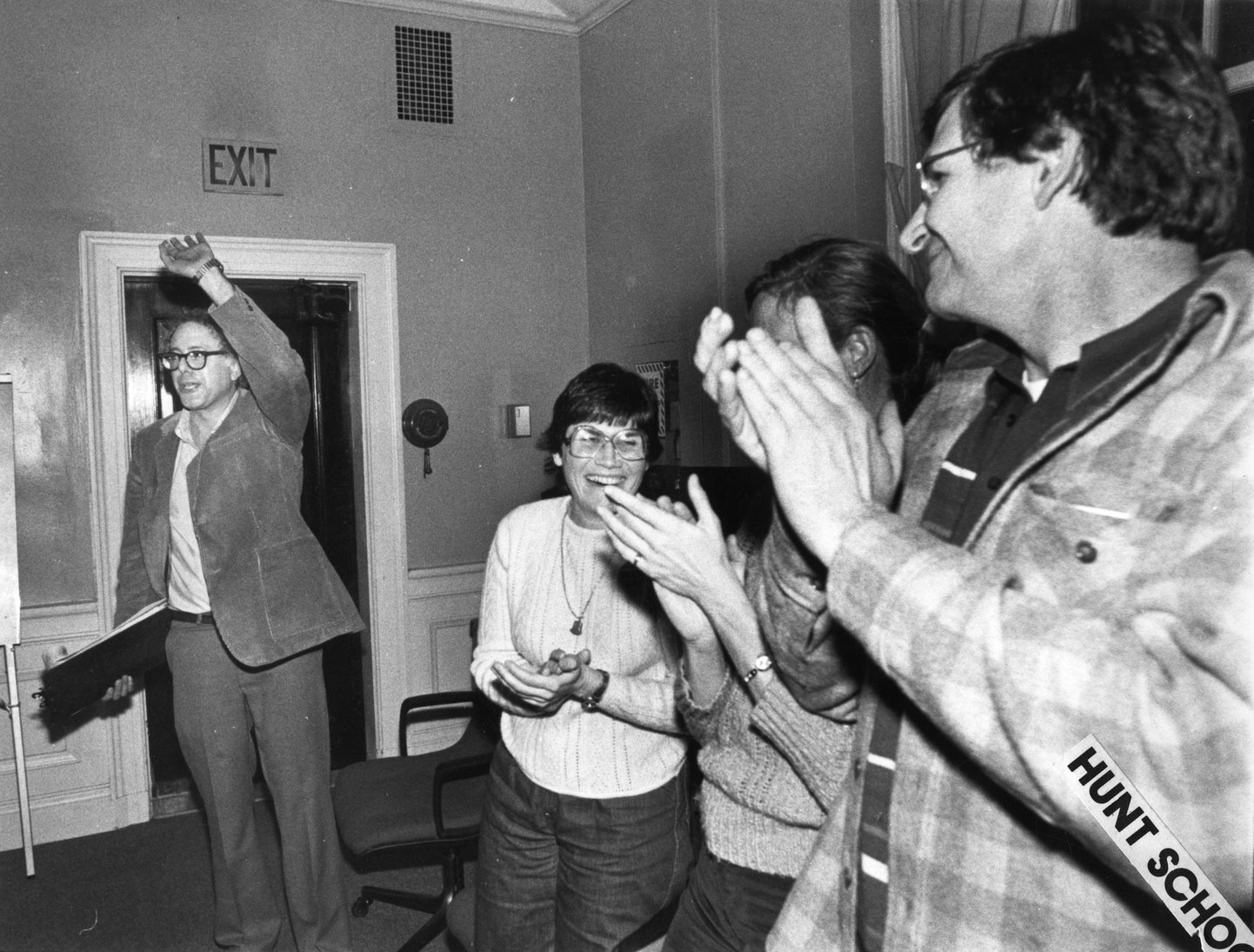
Bernie Sanders waving to a room of people, circa 1970s.Photo courtesy of the Bernie Sanders campaign.
It was 1979 and Bernie Sanders was, as he so often would be for the next forty years, in the middle of a fight. But the target of his ire was, uncharacteristically, not a major corporation or one of its political allies — it was the state’s public broadcaster.
The thirty-eight-year-old Sanders had seemed to exit gracefully from electoral politics in 1977, having run four times under the Liberty Union banner since 1972, twice each for governor and Senate, coming a distant third each time. Charging that Liberty Union had broken promises to stay active in the “struggles of the working people against the banks and corporations which own and control Vermont and the nation,” Sanders had left the party after his best ever showing, turning his focus toward elbowing his way onto the airwaves.
Sanders had been many things since moving to Vermont for good in 1968: carpenter, freelance writer, and, for a time, unemployed. With election campaigns in the rearview mirror, he decided to try his hand at filmmaking, co-founding an educational nonprofit and driving all over New England in sleet or snow, selling cheaply produced film strips directly to schools. By 1979, he had moved to video, producing his magnum opus: a half-hour documentary about socialist Eugene Debs, the twentieth-century union organizer who won a million votes from prison in the 1920 presidential election.