What Chicago Taught Bernie
Chicago is the city where Bernie Sanders first organized as a socialist, struggled for civil rights, and "began to understand the futility of liberalism."
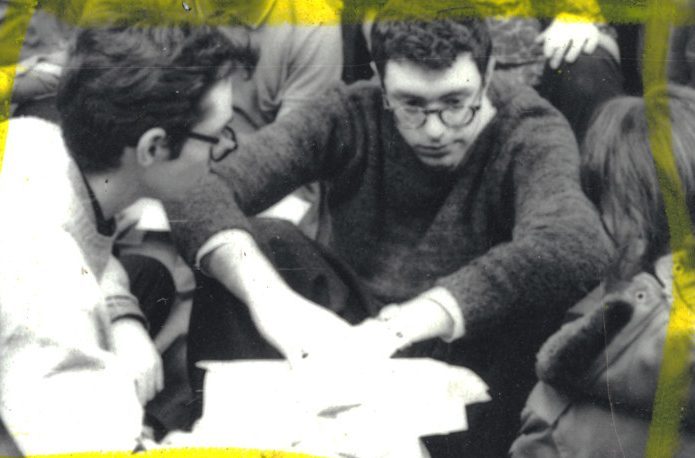
Bernie Sanders during a 1961 sit-in against racial segregation at the University of Chicago. bleakbeauty.com
In January 1962, with protests demanding equal treatment for African-Americans sweeping the country, UChicago saw its first civil rights sit-in. Thirty-three students, most of them white, marched across the gothic campus of the University of Chicago and into the administration building where, on the fifth floor, they began an occupation outside the office of President George W. Beadle. The students, members of the Congress of Racial Equality (CORE), were demanding the university end its policy of housing segregation.
For thirteen days, the students stayed night and day in the hallway next to Beadle’s office until an interim agreement was reached. And throughout the sit-in, the CORE members were led by their president, Bernie Sanders.
Sanders hasn’t always openly touted his time as a racial justice organizer while a student in Chicago. It took the 2016 unearthing of photographs and video showing a young Sanders being arrested while protesting racial discrimination in public education for this history to become a topic of discussion during his last presidential campaign.